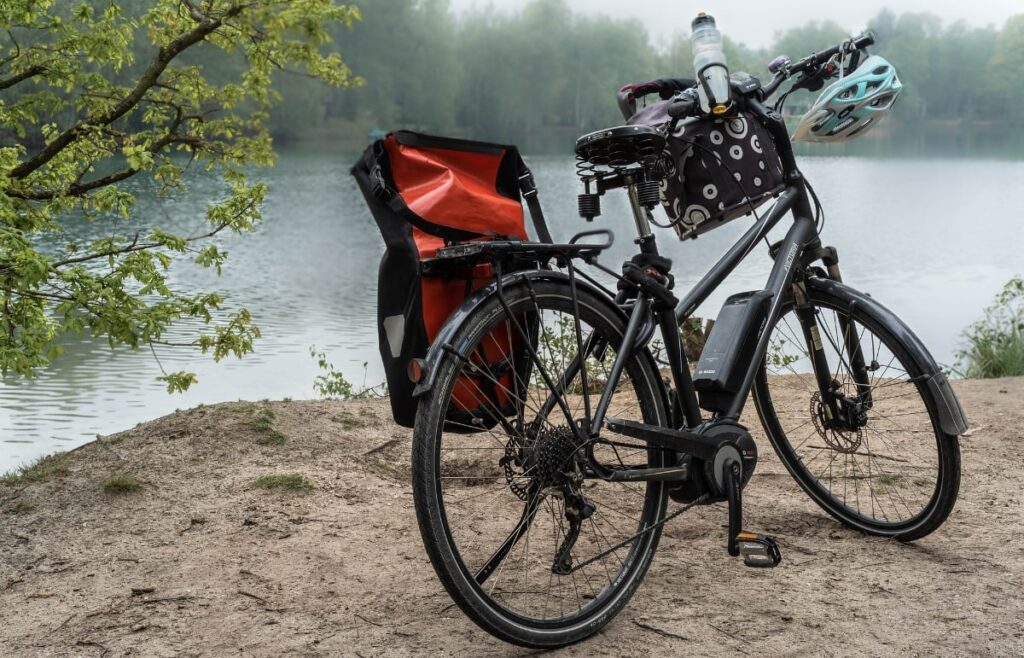
With May being bike month, you might find yourself reaching for your bike helmet instead of the car keys. An easy way to remember what to check on your bike before heading out, especially if you haven’t ridden it in a while, is ‘ABC Quick Check‘:
A – Air: Check the air in your tires. Inflate to the pressure listed on the side of the tire. Spin the wheels and check for wear. If there’s less than 1/4” of tread, it’s time for a new set.
B – Brakes: Brake levers should stop short of reaching the handlebar when pulled. Brake pads should be clean, straight, and contact the rims. You should still be able to see the pattern of grooves in the brake pads. Check coaster brakes by spinning the back wheel and pushing the pedal backward.
C – Chain: The chain should move freely, be free of rust, and lightly oiled. Pro tip: Avoid solvents like WD40 on your chain – use a lubricant instead.
Quick – Quick-release levers: If your bike has quick-release levers, make sure they are all closed.
Check – Give the bike a gentle bounce, looking and listening for anything loose: Take a slow, brief ride to check that your bike seat and handlebars are adjusted to the right height and that everything is working properly.
If your bike needs attention beyond the ABC’s, take it to a local bike shop for a thorough tune-up.
With the start of the new year, a number of new laws and fare or toll increases go into effect. We’ve selected the most significant ones affecting pedestrians, motorists, and cyclists.
TOLL & FARE INCREASES
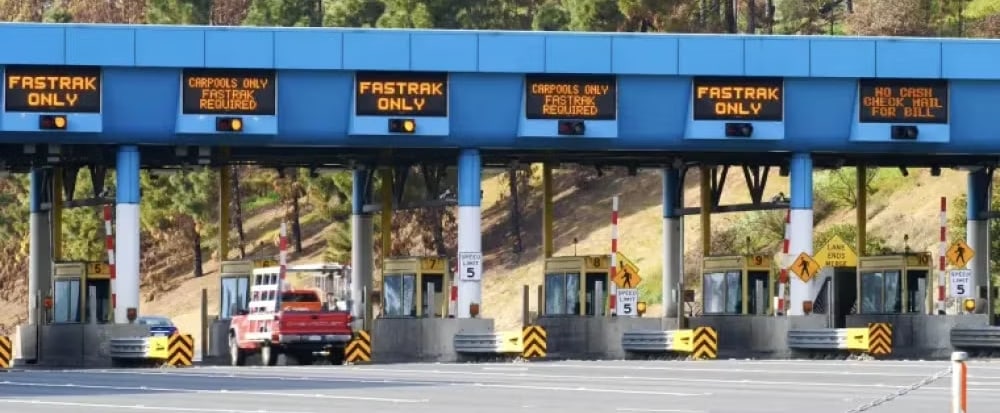
Toll Increases for Seven Bay Area Bridges On January 1, 2026, tolls at the region’s seven state-owned toll bridges went up by 50¢. Regular tolls for two-axle cars and trucks (as well as motorcycles) at the San Francisco-Oakland Bay, Antioch, Benicia-Martinez, Carquinez, Dumbarton, Richmond-San Rafael and San Mateo-Hayward Bridges are now $8.50. (Cars with 3 or more passengers and a FasTrak Flex tagset to 3+ can receive 50% off these tolls.)
BART Fare Increase On January 1, 2026, BART fares increased 6.2% to keep pace with inflation. The average fare went up 30 cents, from $4.88 to $5.18. This increase allows the agency to pay for continued operations and to work toward restoring financial stability.
MOTOR VEHICLE SAFETY
Slow Down and Move Over (AB 390, Wilson) Expands the “slow down and move over” law to include any stationary vehicle or highway maintenance vehicle using flashing hazard lights or warning devices. Drivers approaching such a vehicle must move into a lane that is not next to the stopped vehicle or slow down to a safe speed if changing lanes is not possible.
Is powered by an electric motor that does not require a motor number
Has handlebars for steering, a manufacturer-provided straddle seat, and two wheels
Is not equipped with manufacturer-provided pedals
The law also classifies an “off-highway electric motorcycle” or “eMoto” as an off-highway motor vehicle (OHV), thereby requiring the operator to follow OHV rules, including displaying a DMV-issued ID plate or placard.
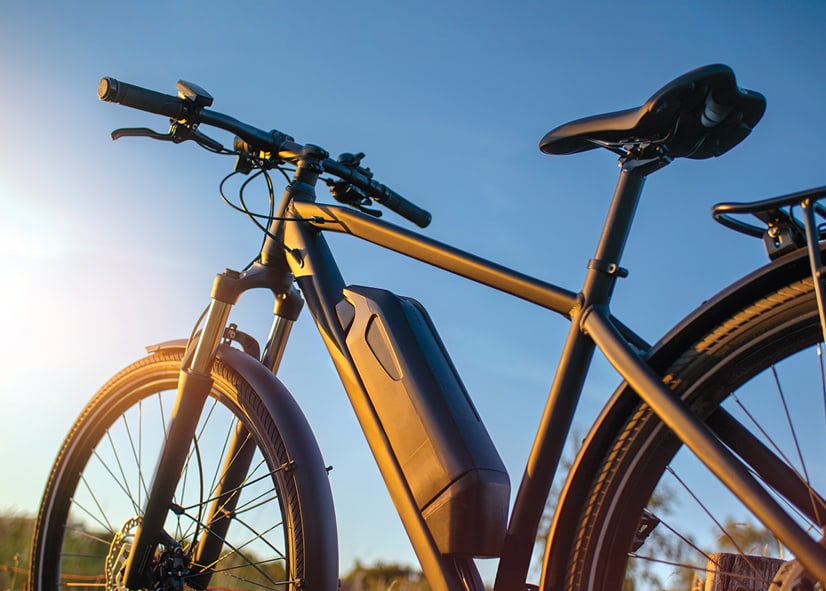
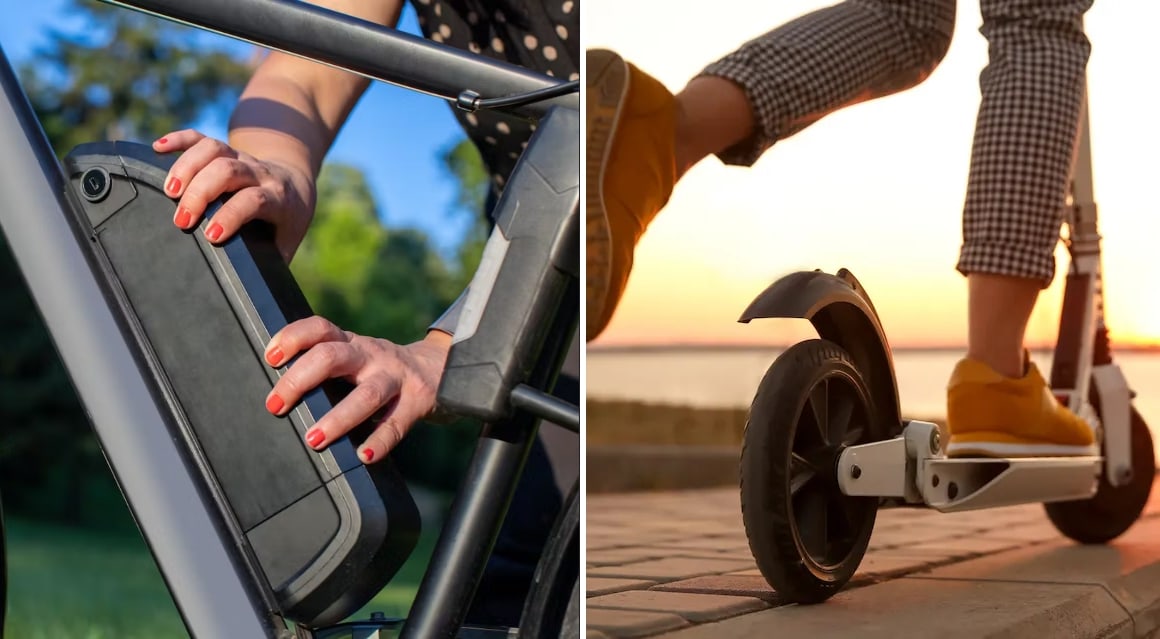
Electric Bicycles and Storage Batteries (SB 1271, Min) Beginning January 1, 2026, the law requires that e-bikes and their components, such as batteries and charging systems, must be tested by accredited laboratories to meet specific safety standards. The bill also mandates labeling these products to show compliance with safety regulations, ensuring consumers are informed.
PEDESTRIAN SAFETY
School Zone Speed Limits (AB 382, Berman) Gives local authorities the discretion to lower the school zone speed limit from 25 to 20 miles per hour. On January 1, 2031, the speed limit for school zones throughout California will automatically decrease from 25 to 20 miles per hour.
AUTONOMOUS VEHICLES
Autonomous Vehicles (AB 1777, Ting) Law enforcement officers now have the ability to issue a “notice of autonomous vehicle (AV) noncompliance” to an AV manufacturer for an alleged traffic violation committed by one of their vehicles.
Parking Ticket Relief (AB 1299, Bryan) Authorizes local governments to waive or reduce parking penalties if a person is unable to pay and requires the provision of a payment plan if requested. The goal is to prevent escalating fines, vehicle towing, and lien sales that can disproportionately impact low-income individuals.
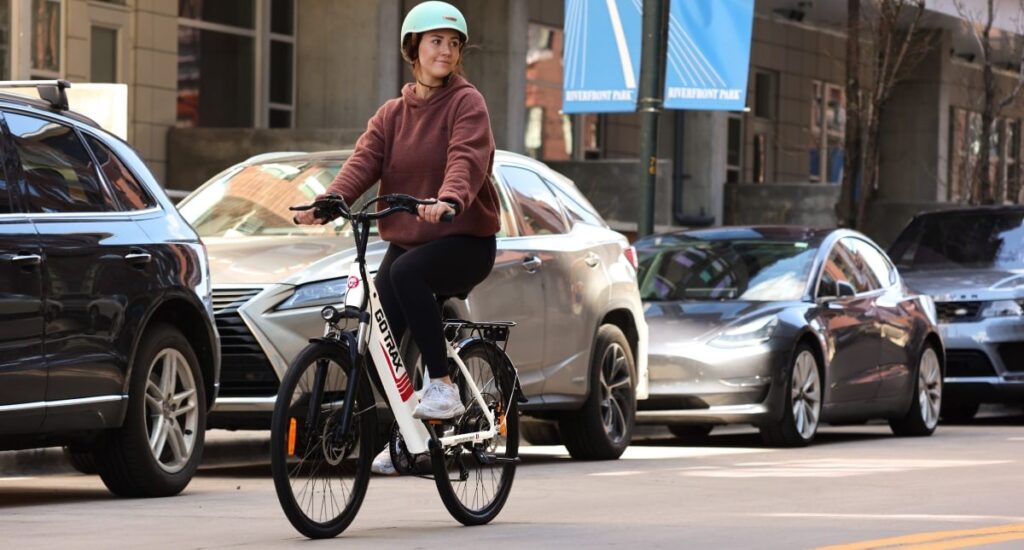
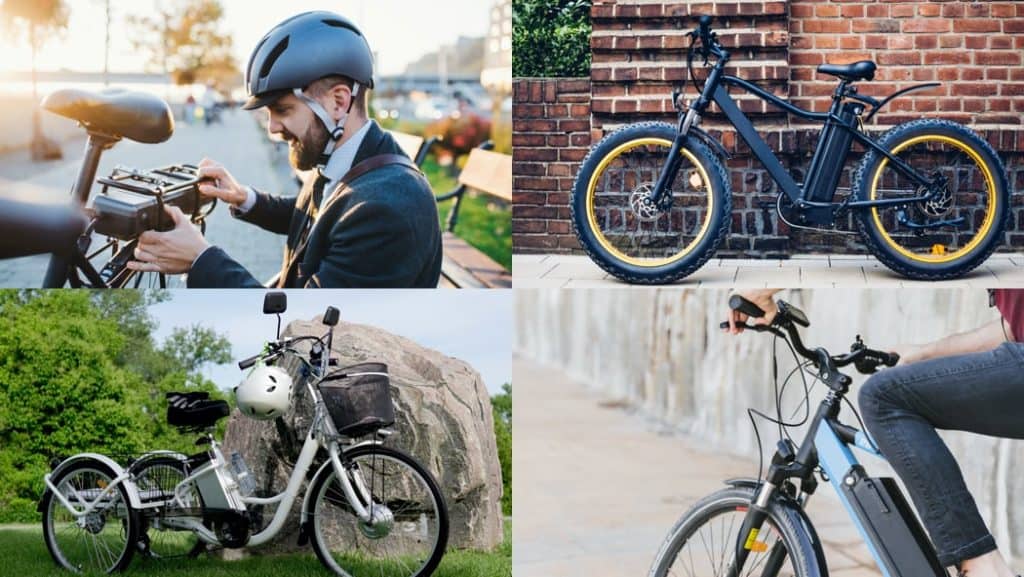
E-bikes are gaining popularity with teens and pre-teens as they offer independence, allow longer trips, and can cruise up steep hills. Hauling heavy books and equipment is a lot easier, too. More kids on bikes means fewer cars on the road, which is a benefit for everyone.
No matter what type of e-device your child is riding, a parent or another experienced adult cyclist is advised to ride with their child to teach rules of the road and safe riding skills. Having them take a training course is a great way to help keep them safe.
If your child cannot maintain control, rides unpredictably, or has trouble handling the device in various conditions, it is too soon for them to graduate from their traditional, non-motorized bike or scooter.
Should I Get My Child an E-Bike?
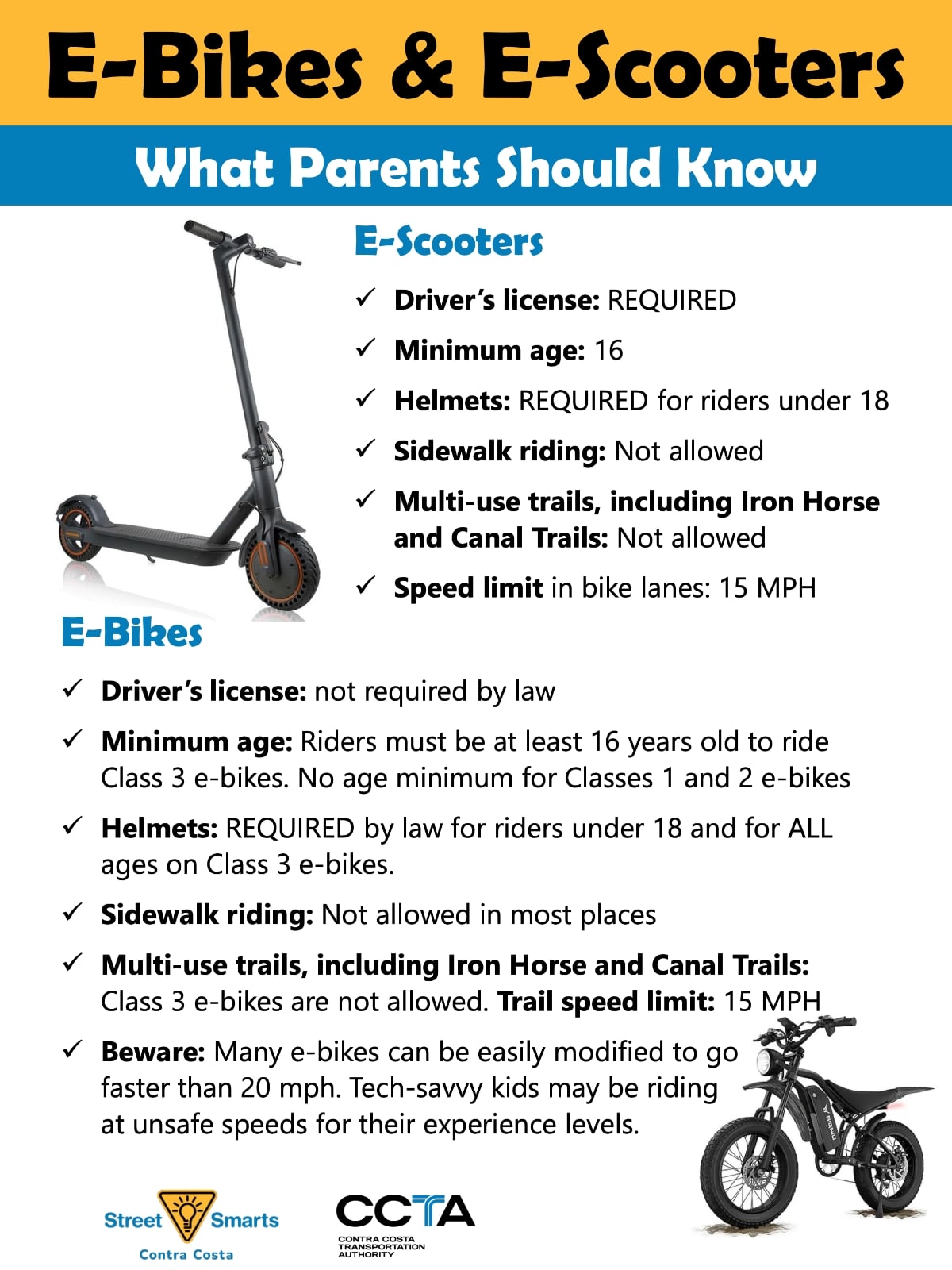
For now, no law prohibits minors from riding Class 1 and Class 2 e-bikes (those with maximum assist speeds of 20 mph). To operate a Class 3 e-bike, which can provide assisted speeds of up to 28 mph, riders must be at least 16 years of age, although a driver’s license is not required.
It’s also important to know the difference between e-bikes and e-motos, which are essentially mini-motorcycles. E-motos are of particular concern in many cities and school districts.
Parents are advised to assess their child’s cycling skills and to consider their levels of experience and maturity before allowing them to ride an e-bike. More:
Children under the age of 18 are required to wear a helmet on any type of bike/e-bike, scooter, skateboard, or roller skates. (Adults are also legally required to wear a helmet on Class 3 bikes.)
In most cases, riding any type of bike on sidewalks (including e-bikes) is less safe than riding in the bike lane. Sidewalk riding is not permitted in most places.
The speed limit on multi-use trails – including all paved East Bay Regional Parks trails – is 15 mph.
Parents: Be aware that many Class 2 e-bikes can be easily modified after purchase to go faster than 20 mph, allowing tech-savvy kids to travel at speeds unsafe for their level of experience.
E-bikes are heavier and harder to maneuver than traditional bicycles; it takes longer to stop them at higher speeds.
If you’re looking to score big points by giving your child an electric scooter, be aware that California state law requires a driver’s license to operate an e-scooter. This means children younger than 16 cannot legally ride an e-scooter. More:
Helmets are mandatory for electric scooter riders under the age of 18.
E-scooters cannot be ridden on sidewalks or multi-use trails – including Iron Horse and Canal Trails.
The speed limit for scooters in bike lanes is 15 mph.
Riding tandem, with a buddy, is not allowed.
E-scooter riders must follow all the same rules of the road as drivers.
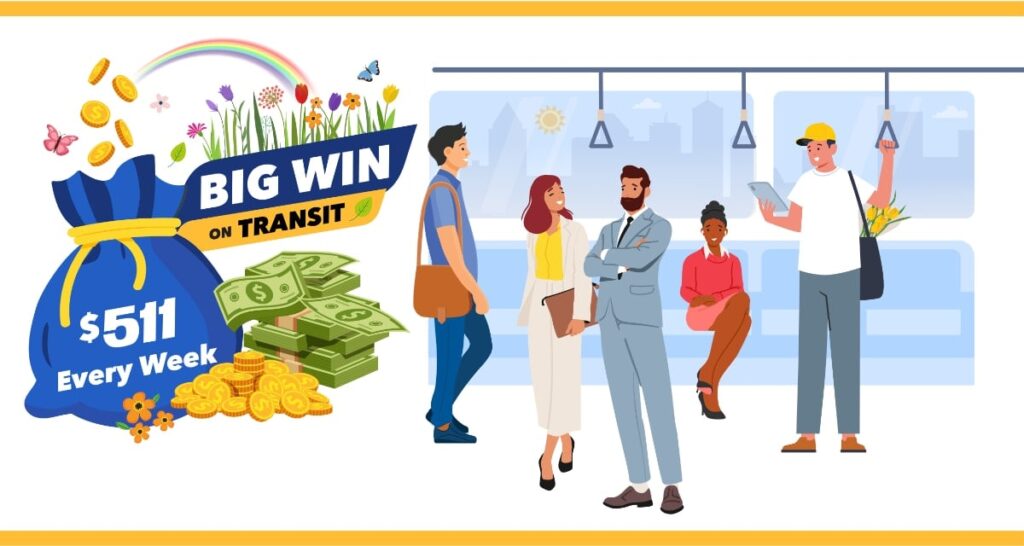
When choosing how to get around – commuting, running errands, or going out – cost can be a factor. But now, one of your transportation options gives you chances to win money!
With Big Win on Transit, for every day you take transit Monday through Sunday, you earn an entry in that week’s drawing for $511. So, the more often you choose transit, the more likely you are to win. If you’re 18+ and live or work in Contra Costa County, you’re eligible to participate.
How to Participate
Putting yourself in the running is easy. First, create your Big Win on Transit account. After that, log your week’s trips (Monday-Sunday) by Sunday at midnight. During the trip-logging process, you’ll upload proof of your rides – a screenshot of a Clipper card transaction showing at least one ride during that week, or a photo of your digital ticket or paper bus pass.
You can log your trips daily or enter them all at once, as long as you get them in by the deadline. Weekly drawings for $511 take place every Monday.
If you’re ready to get started, click below to sign up. For more information, visit our Big Win on Transit page for complete details.
With the start of the new year, a number of new laws and fee increases go into effect. We’ve selected the most significant ones affecting pedestrians, motorists, and cyclists.
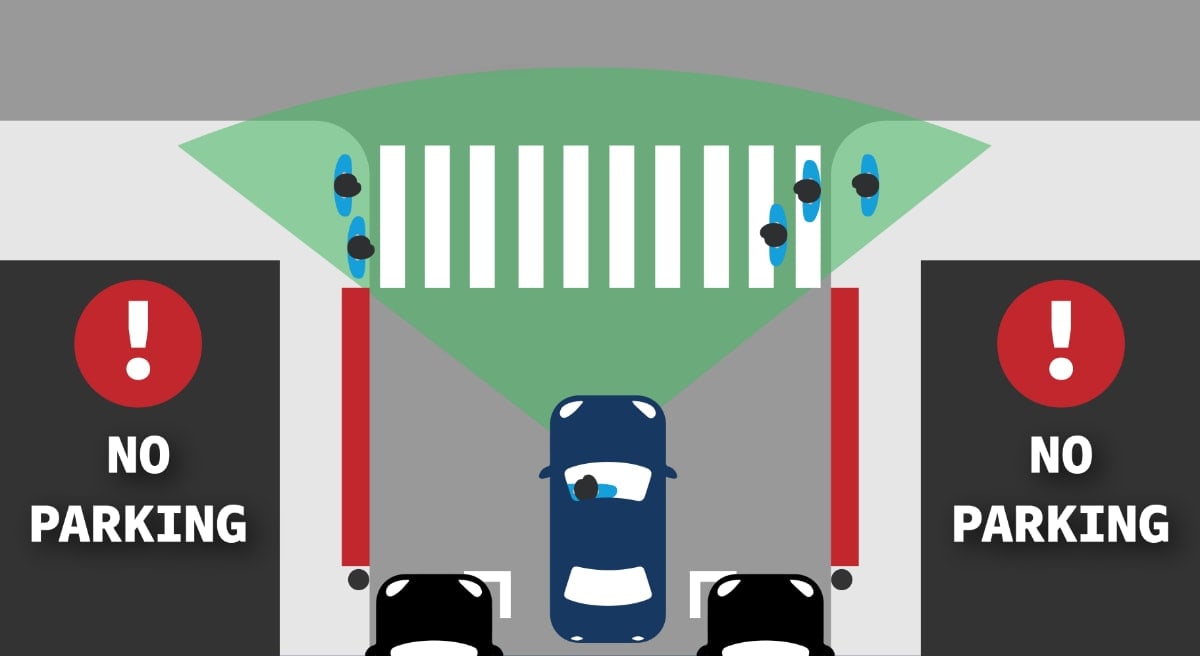
Increasing Visibility Around Crosswalks (AB 413): As of January 1, 2025, it is illegal in California to park within 20 feet of the approach of any marked or unmarked crosswalk, even if there are no painted red curbs. Specifically, the law:
Prohibits the stopping, standing, or parking of a vehicle within 20 feet of any unmarked or marked crosswalk or 15 feet of any crosswalk with a curb extension.
Prohibits parking on the right-hand side of a two-way street within 20 feet of a crosswalk.
Prohibits parking on both sides of a one-way street within 20 feet of a crosswalk.
Allows local jurisdictions to paint zones that are longer or shorter than 20 feet to identify a specific no parking zone.
Safer State-Owned Roads (SB-960): Caltrans is now required to prioritize road improvements for pedestrians, cyclists and public transit riders. This includes improving and increasing sidewalks, bike lanes, bus-only lanes, safe crosswalks, accessible pedestrian signals and more.
No Tolls for Pedestrians on Bridges (AB-2669): This law prohibits tolls from being imposed on a pedestrian on certain bridges, including ones owned by the state.
Increase in Minimum Auto Liability Coverage(SB-1107):California motorists are required to carry insurance. As of January 1, 2025, the new minimum liability insurance requirements according to the Department of Motor Vehicles are:
$30,000 for bodily injury or death of one person
$60,000 for bodily injury or death of all persons
$15,000 for damage to property
Toll Increases for Seven Bay Area BridgesOn January 1, 2025, tolls at the region’s seven state-owned toll bridges went up by $1. Regular tolls for two-axle cars and trucks (as well as motorcycles) at the San Francisco-Oakland Bay, Antioch, Benicia-Martinez, Carquinez, Dumbarton, Richmond-San Rafael and San Mateo-Hayward Bridges are now $8.
BART Fare Increase On January 1, 2025, BART fares increased 5.5% to keep pace with inflation. The average fare will go up 25 cents, from $4.47 to $4.72. The increase is tied to the rate of inflation minus a half-percentage point. It allows the agency to pay for continued operations and to work toward restoring financial stability.
Vehicle Break-Ins and Theft (AB-2536) Expands the definition of “vehicle theft crimes” to include the theft of vehicle parts such as catalytic converters.
License Plate Obstruction or Alteration (AB-2111) Prohibits a person from altering their license plate’s reflective coating to evade electronic capture of the license plate for any reason.
Driver Monitoring “Defeat” Devices (SB-1313) Prohibits a person from using a device designed to interfere with a driver monitoring system on a vehicle with advanced driver-assistance system features or autonomous technology. An example of this would be placing steering wheel weights to mimic hands placed on the wheel. “Defeat” devices are dangerous because they bypass safety features designed to ensure that drivers remain alert.
BART has made improvements in a variety of areas, including cleanliness, safety, accessibility, and reliability. Here’s a snapshot of what they’ve done:
Cleaning and Safety
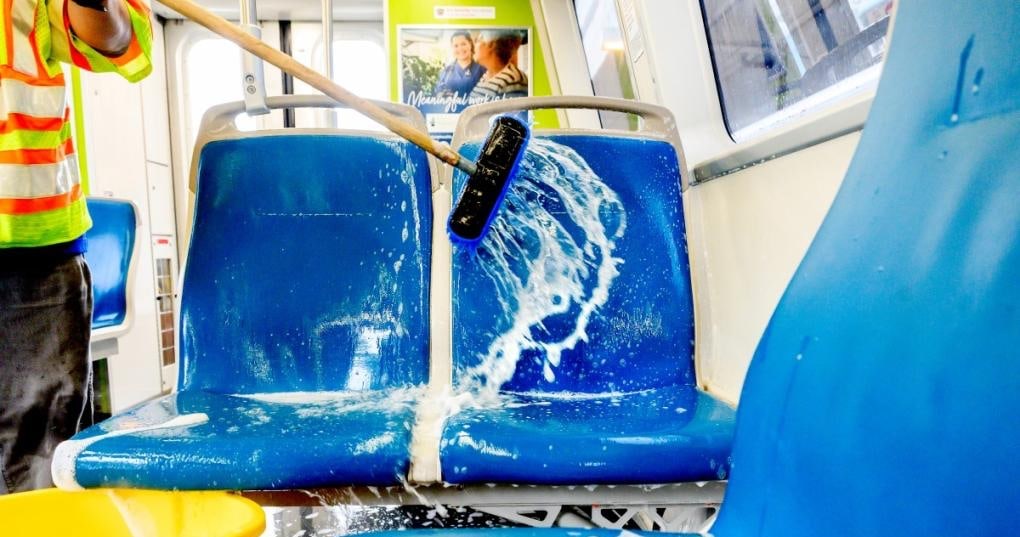
In fall 2023, BART launched its Safe and Clean Plan to keep trains cleaner, make sure riders feel safe, and provide exceptional service. BART doubled the rate of deep cleaning on train cars, retired all older trains, and added nearly 66% more cleaning crews. They also installed LED lighting on platforms and in parking facilities to eliminate dark corners, and staffed station restrooms at high-volume stations with attendants, to guarantee cleanliness and safety.
BART also doubled the presence of BART Police officers throughout the system and allocated more of their time to riding the trains. The increased patrols have already helped deter crime, aid in apprehending suspects, and enforce the BART Code of Conduct. The number of trains delayed by unwanted behavior dropped nearly 40% from May to October 2023, and more riders than ever say they are seeing BART PD on their trips.
BART also uses unarmed Crisis Intervention Specialists, Ambassadors, and Fare Inspectors for additional patrols. As a result, 7% of calls have been diverted from police to an employee with training in social work.
Fleet of the Future Trains for All Trips
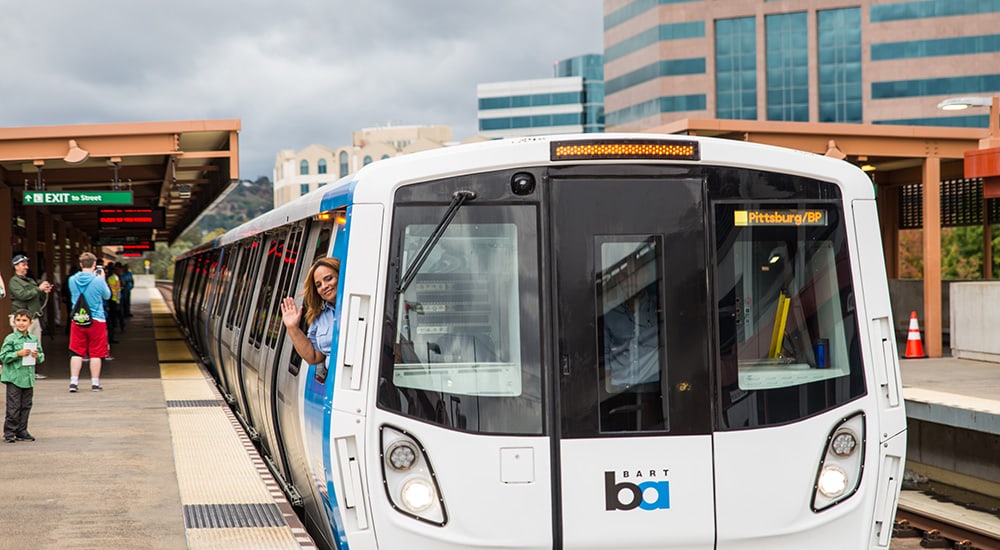
In September 2023, BART began running Fleet of the Future trains exclusively as part of their reimagined schedule. The change means an upgrade to the rider experience and greatly improved on-time performance, since the new trains are much more reliable than legacy trains.
The implementation of BART’s reimagined schedule delivered a number of other benefits. In addition to a 50% increase in evening service, the wait time between trains became 20 minutes or less – no matter the hour of the day or day of the week. Service on the Yellow Line, BART’s busiest weekday line, also increased from trains every 15 minutes to every 10 minutes from Pittsburg/Bay Point Station.
Clipper-Only Fare Payment
In December, BART completed the move to a Clipper-only fare payment system. Clipper is accepted by all Bay Area transit agencies, and many of them offer discounted fares for using Clipper. The ‘tag in, tag out’ system allows riders to move through fare gates faster than the old paper tickets, plus riders can set up their Clipper card account to reload automatically.
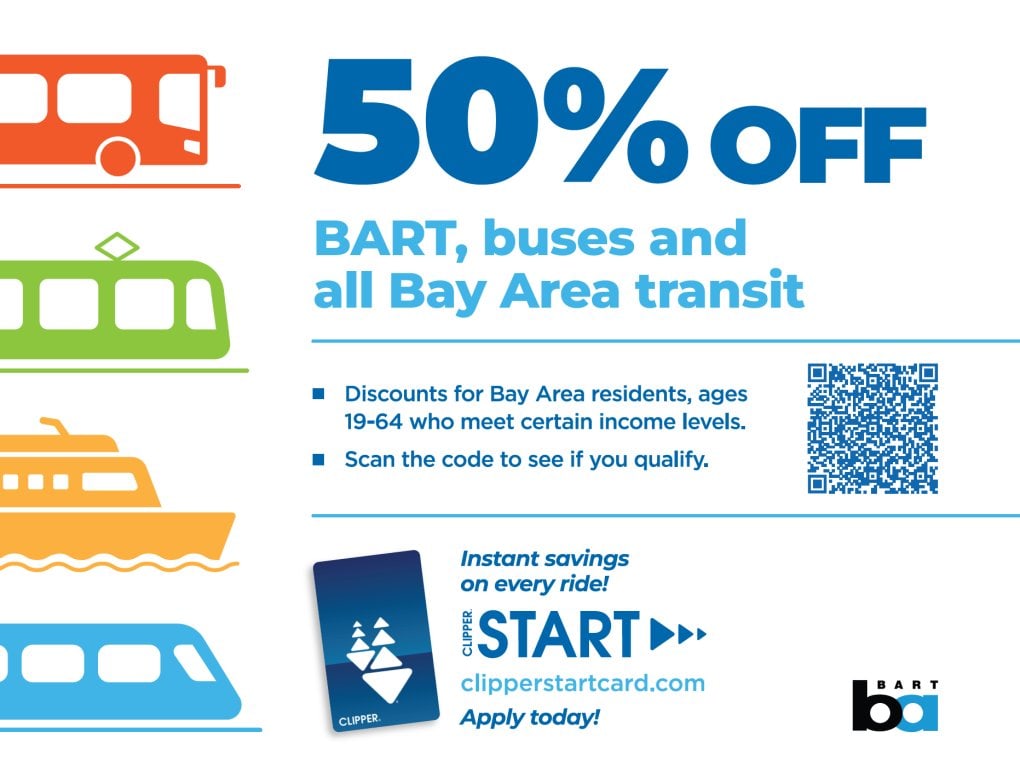
One of the biggest advantages in BART moving to Clipper-only is the ability to efficiently provide discounted fares to qualifying riders based on age, income, and disability. Clipper offers Youth, Senior, RTC, and START cards. The Clipper START card provides low-income riders 50% off single-ride transit fares throughout the Bay Area.
Improved Fare Gates
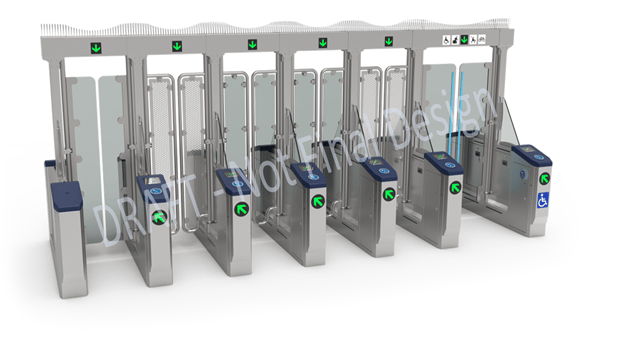
BART has begun the process of installing brand-new fare gates systemwide. The first prototype gates have already gone into service at West Oakland station, and Richmond and Antioch stations will receive new fare gates in summer 2024. The new gates offer a variety of benefits:
Accessibility – Gates can detect wheelchair users and those with luggage, strollers, or bikes to ensure they get through with ease. LED lighting assists visually impaired riders.
Safety – The new fare gates have tall swing barriers, making them more difficult to push through, jump over, or climb under.
Expanded Payment Compatibility – The new gates will be compatible with the next generation of Clipper, which will allow payment by debit card, credit card, Apple Pay, or Google Pay.
Try Riding BART with a Free $25 Clipper Card
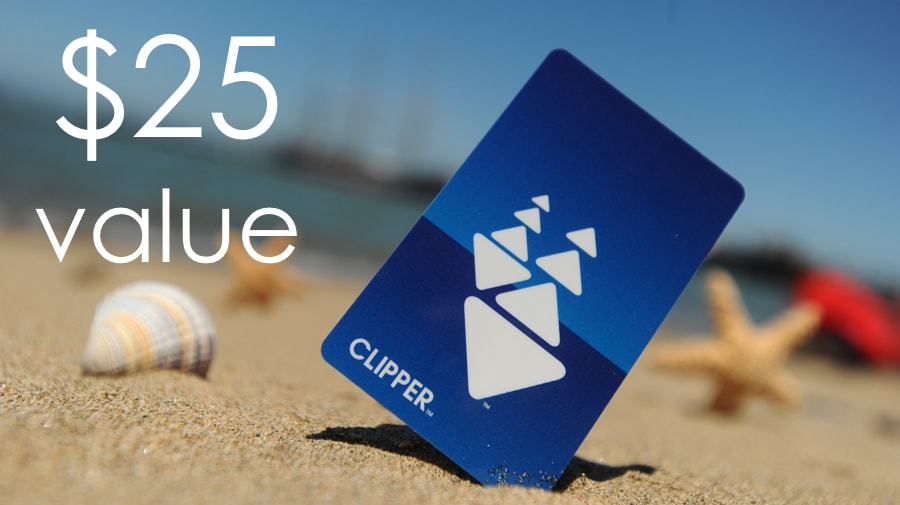
With all the improvements to the system, it’s worth taking a ride on BART. And if you currently commute by driving alone, you can try it for free. Just request a complimentary $25 Clipper card through 511 CCTA’s Try Transit program. The offer is available to commuters 18+ who live or work in Contra Costa County.
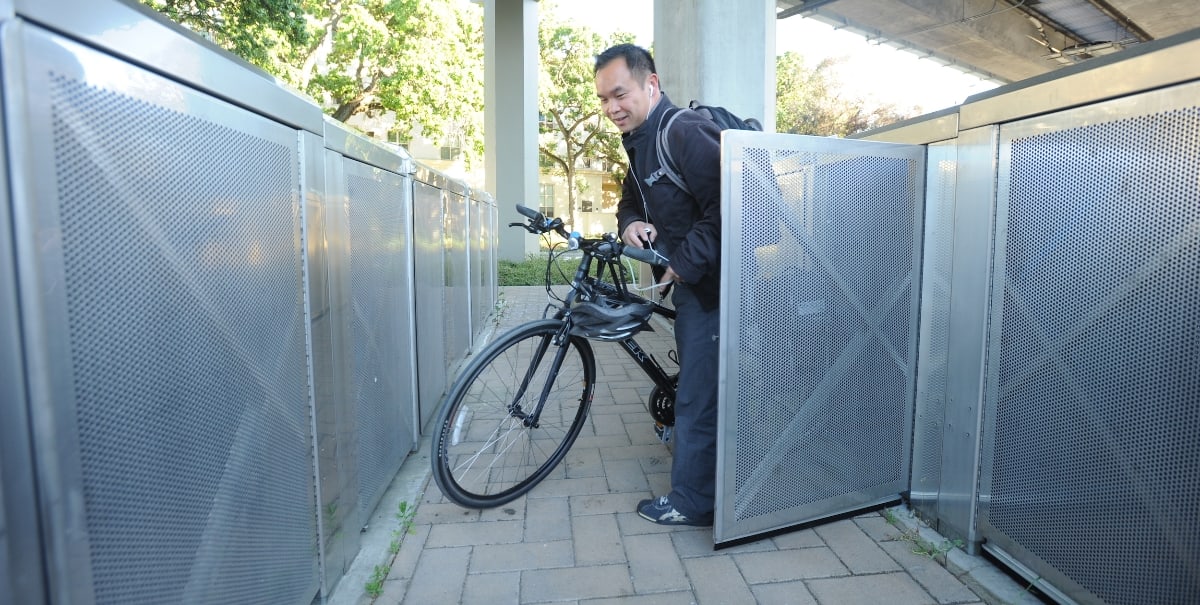
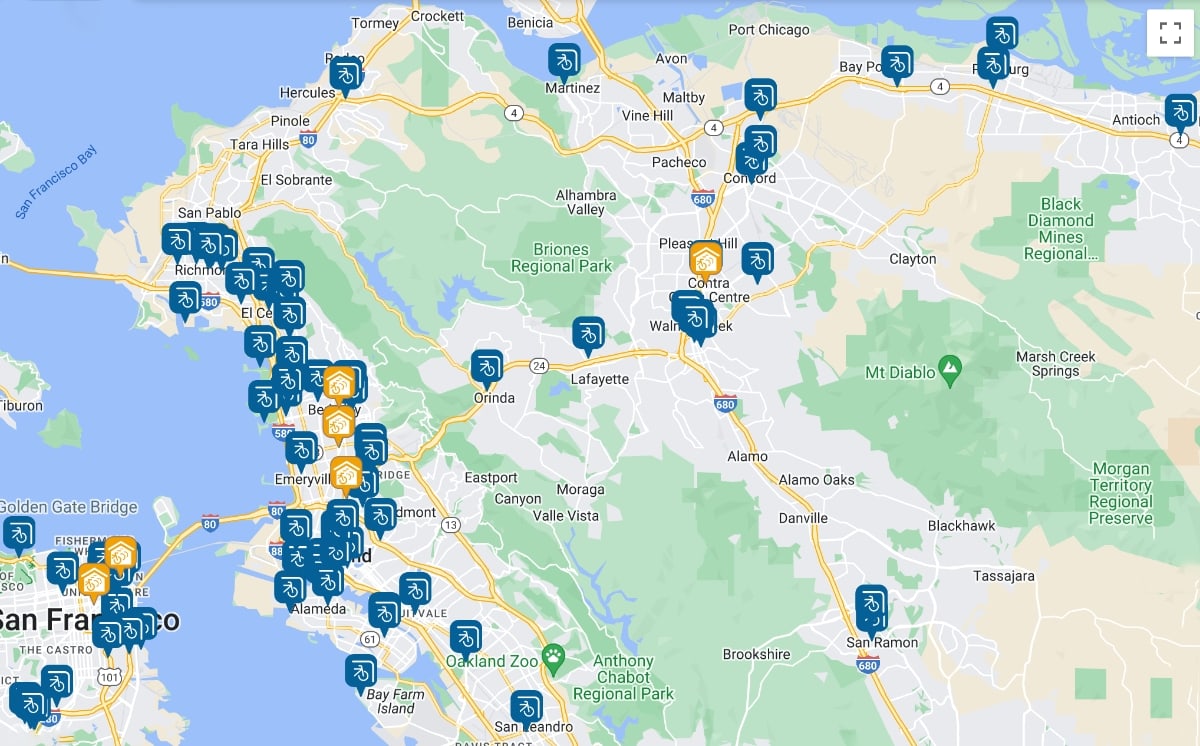
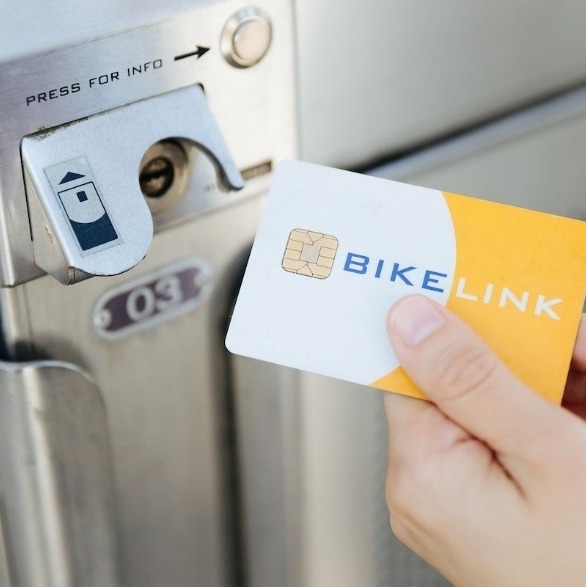
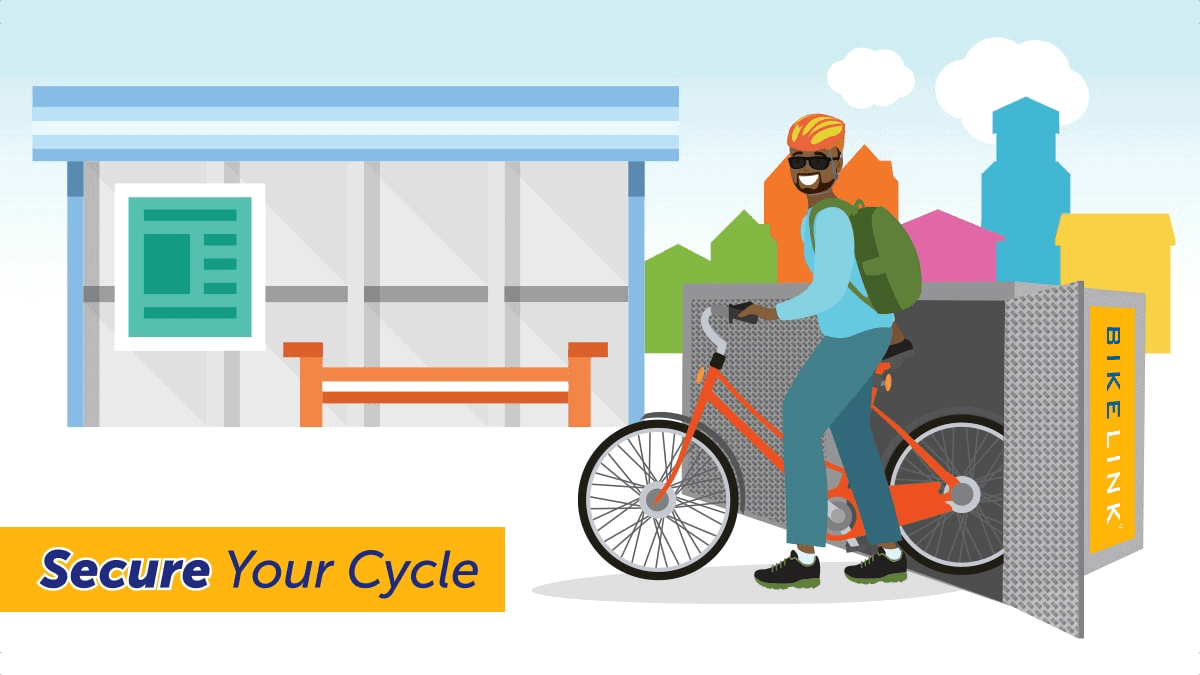
Leaving your bike locked on the street or at transit stops can be stressful. That’s why BikeLink built a network of secure public electronic bike lockers and group parking locations. Not only are they easy to use, but they cost just pennies an hour. You pay for bike parking with either a BikeLink card or the BikeLink app, depending on location. And they’re conveniently located – you’ll find them at all Bay Area BART, Capitol Corridor, and Amtrak stations, as well as other popular destinations.
Map of BikeLink Locker and Group Parking Locations
BikeLink E-Locker Features
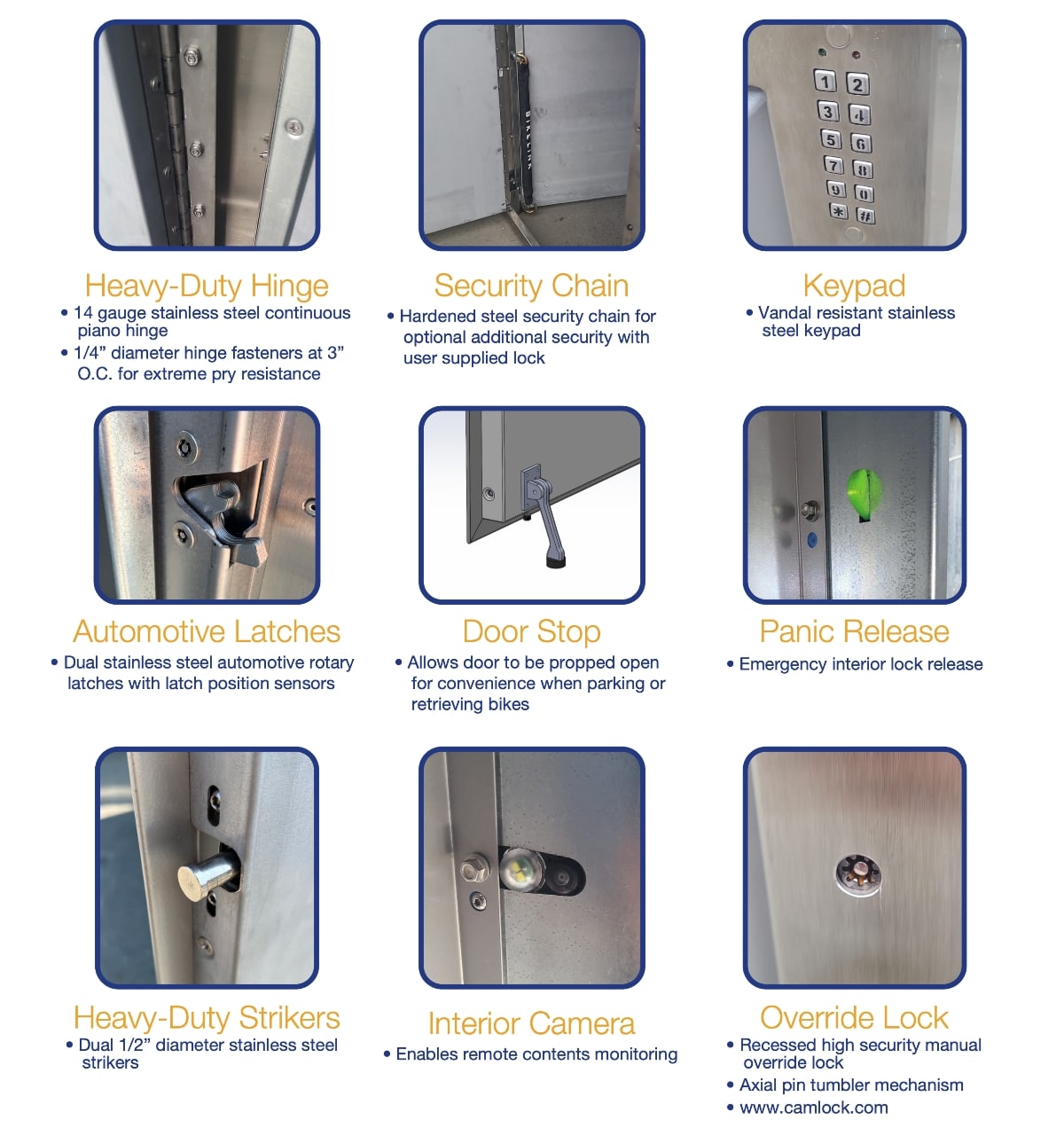
BikeLink’s e-lockers make it easy to relax when you’re away from your bike. The fully-enclosed lockers feature all-steel construction and are designed specifically to resist prying and cutting. The locker door springs even make them self-closing, so you don’t accidentally leave your bike unsecured.
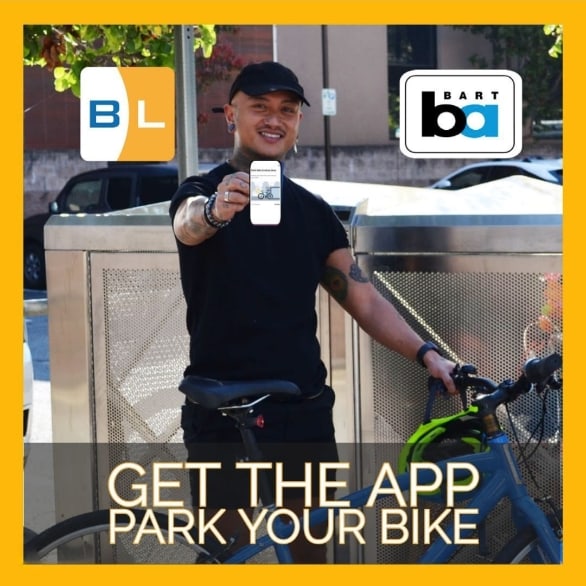
While the list of security features on BikeLink’s standard e-lockers is already impressive, they have started installing next-generation e-lockers which also feature vibration sensors, a keypad, an interior camera (to enable remote monitoring), and app-based access. The Shadelands Business Center in Walnut Creek features two of these new high-tech e-lockers. Located in the Del Monte parking lot, they offer parking for up to four bikes. (Note: To use the new lockers you’ll need to download the BikeLink app.)
Features on BikeLink’s next-generation e-lockers
Bike Stations
For areas which see a large amount of commuter traffic, there are even indoor group parking locations called “bike stations” which offer 24-hour controlled BikeLink access. Bike stations are located in or close to BART stations, and Contra Costa has one at Pleasant Hill BART station. There are also two in San Francisco, at Embarcadero and Civic Center BART stations.
How to Find BikeLink Bike Parking
BikeLink’s map makes it easy to locate e-lockers and bike stations. Most are accessed with a pre-paid BikeLink card which you can get at bike stations, Capitol Corridor, some bike shops, and online at BikeLink.org. Some, like the new e-lockers at Shadelands in Walnut Creek, require the BikeLink app.
Secure Your Cycle Offer: Complimentary $20 BikeLink Credit
If you’d like to try biking to work, request a complimentary $20 BikeLink credit through our Secure Your Cycle promotion. $20 in credit is the equivalent of 400 hours of bike parking at BikeLink’s secure, electronic lockers. If you’re 18+, live or work in Contra Costa, and want to reduce your car trips for commuting, click below to see if you qualify and apply.
With the start of the new year, a number of new laws go into effect. We’ve selected the most significant ones affecting pedestrians, motorists, and cyclists from the California Highway Patrol’s review of new transportation laws:
Increasing Visibility Around Crosswalks (AB 413): Vehicles are prohibited from stopping or parking a vehicle within 20 feet of an intersection or crosswalk, or within 15 feet of any crosswalk where a curb extension is present. The law is intended to increase visibility for all road users to see oncoming traffic.
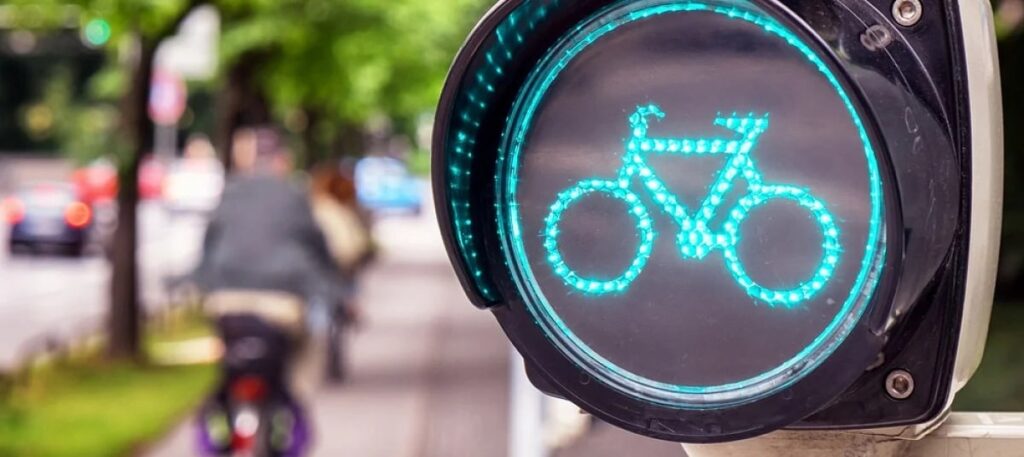
Cyclists Crossing with Bicycle or Pedestrian Signals (AB 1909): Whenever a traffic signal with different colored bicycle symbols exists in the same location as traffic signals for cars or pedestrians, a cyclist must obey the bicycle traffic signal. If no bicycle traffic signal is present, cyclists are allowed to cross when the pedestrian walk signal is lit, even if the traffic signal for cars is red.
Speed Camera Pilot Program (AB 645): As part of a five-year pilot program, Oakland and San Francisco can install a limited number of speed cameras on local streets where there are safety concerns. The cameras will automatically take a picture of a speeding car’s license plate and deliver a notice of violation to the registered owner through the mail.
Crackdown on Catalytic Converter Theft (SB 55): To help combat theft, motor vehicle dealers are required to ensure a catalytic converter has been permanently marked with a vehicle’s identification number (VIN) before selling that vehicle.
Traffic Stops (AB 2773): Requires a peace officer making a traffic or pedestrian stop to state the reason for the stop before asking any questions.
Driver’s Licenses Can No Longer Be Impounded (AB 1125): Courts no longer have the authority to impound a person’s driver’s license if they fail to make payments for bail or a fine. The law is intended to reduce the harm caused to people with low incomes who need to drive to work or access essential services.
If you’re looking to score big points by giving your child an electric scooter, be aware that California state law requires a driver’s license to operate an e-scooter. This means children younger than 16 cannot legally ride one. More:
Helmets are mandatory for electric scooter riders under the age of 18.
E-scooters cannot be ridden on sidewalks or multi-use trails.
The speed limit for scooters in bike lanes is 15 mph.
Riding tandem, with a buddy, is not allowed.
E-scooter riders must follow all the same rules of the road as drivers.
WhatAbout Getting an E-Bike for My Child?
For now, no law prohibits minors from riding Class 1 and Class 2 e-bikes (those with maximum assist speeds of 20 mph). To operate a Class 3 e-bike, which can provide assisted speeds of up to 28 mph, riders must be at least 16 years of age, although a driver’s license is not required. Parents are advised to assess their child’s cycling skills and to consider their levels of experience and maturity before purchasing them an e-bike. More:
Children under the age of 18 are required to wear a bike helmet on any type of bike/e-bike, scooter, skateboard, or roller skates. (Adults are also legally required to wear a helmet on Class 3 bikes.)
In most cases, riding any type of bike on sidewalks (including e-bikes) is less safe than riding in the bike lane. Sidewalk riding is not permitted in most places.
The speed limit on multi-use trails for all bikes is 15 mph.
Parents: Be aware that many Class 2 e-bikes can be easily modified after purchase to go faster than 20 mph, allowing tech-savvy kids to travel at speeds unsafe for their level of experience.
E-bikes are heavier and harder to maneuver than traditional bicycles; it takes longer to stop them at higher speeds.
If you plan to get your child an e-bike or e-scooter, a parent (or experienced adult cyclist) is advised to ride with them to teach and demonstrate the rules of the road and safe riding techniques. If your young rider cannot maintain control, rides unpredictably, or has trouble handling their new wheels in various types of conditions, it may be too soon for them to graduate from their traditional, non-motorized bike or scooter.
According to the California Bicycle Coalition, more than fifteen percent of vehicle trips made in California are less than one mile. Eighty percent are less than ten miles. This makes an e-bike a great choice for replacing car trips. However, the cost of e-bikes are one of the strongest barriers to adoption, according to a recent study by researchers at UC Davis.
The good news is that both nationwide and statewide, programs offering cash incentives to help individuals purchase e-bikes are on the rise. In California alone, there are at least ten such programs.
To see how people’s travel behavior changed after buying an e-bike using an incentive program, UC Davis researchers evaluated survey data from rebate participants in programs across Northern California – including 511 CCTA’s program. They discovered between 35 and 50 percent of e-bike trips made by these individuals would have been made by car if an e-bike had not been available.
Rebate recipients also reported an increase in bicycle use. Two months after getting an e-bike, most reported shifting from biking “never” or 1-3 times a month to 1-3 times a week.
As for how getting an e-bike affected their driving habits, most e-bike rebate recipients replaced driving trips with riding e-bikes at least 1–3 times per month. Across the study group, a large share of respondents (82%) reported replacing at least one car trip with an e-bike ride.
The takeaway is that e-bike incentive programs work. And the majority of people who purchase e-bikes change their driving and biking behaviors, which helps reduce both traffic congestion and greenhouse gas emissions.
Let us help get you on an e-bike! Our E-Bike Rebate Program, which started three years ago, is still going strong. It offers rebates of $150, $300, and $500 to Contra Costa County residents. You have six months from the date you buy an e-bike to apply, so if you bought an e-bike recently, be sure to apply today!
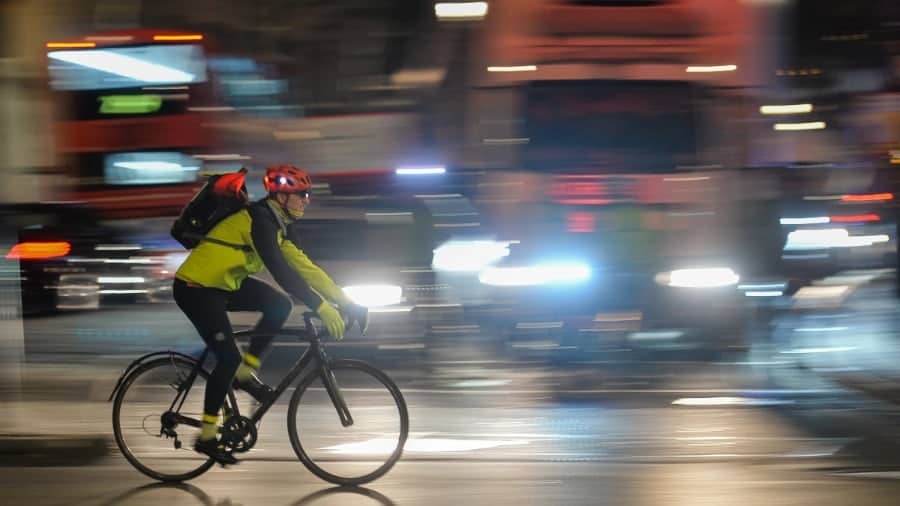
With the end of Daylight Savings Time, sunset will occur before 5pm for most of the remainder of the year. This means the majority of commuters will be traveling home in the dark.
When biking after dark, especially during peak commute hours, it’s important to be both highly visible and able to clearly see your surroundings. Along those lines, here are some tips to help keep you safe:
Lights
Minimum Requirements: Front White Light and Rear Red Light or Reflector
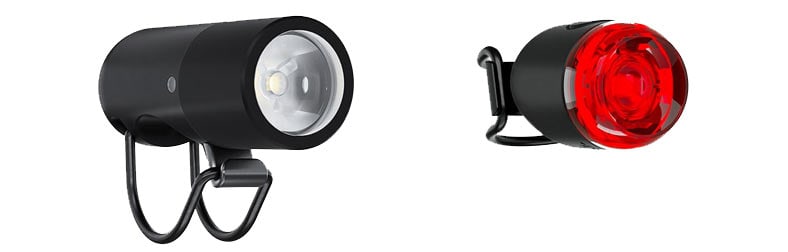
By California law, if you’re biking after dark you must have a white light on the front of your bike and a red light or reflector on the rear of your bike. The front light needs to be clearly visible 300 feet in front of and to the sides of the cyclist.
If Riding Unlit or Poorly Lit Roads, Choose a Light That Illuminates the Road
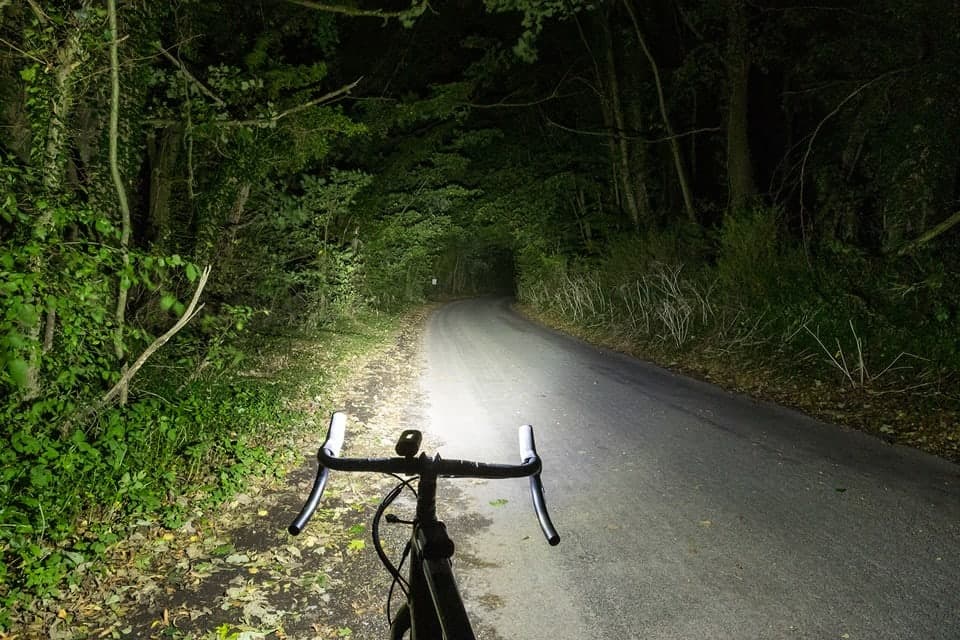
Where a low-power front light might work to announce your presence on well-lit roads, on poorly lit or unlit roads you’ll need a light that can show you the road ahead. You’ll want to consider a light with an ouput of 400 to 800 lumens. That way you can see the road up ahead, identify obstacles and hazards, and let oncoming vehicles know you’re on the road. You’ll also want to consider using a red rear light, instead of just a reflector, in these conditions.
Wear Bright Clothing and Reflectives to Increase Visibility
For biking after dark, Hi-Vis yellow and green are the best colors for visibility. Steer clear of dark colors. Reflective details on clothing can boost visibility in general, as well as provide side-visibility, which lights alone often can’t. Reflective piping on gloves can assist others in seeing you and your hand signals.
Stay in View and Ride Predictably
Drivers are generally looking ahead, so when cycling at night you want to make sure you’re in their field of vision:
On roads where there is no bike lane, be sure to make use of the full lane, so that you are clearly visible to the motorists behind you.
Don’t make sudden turns without signaling properly.
When you’re headed somewhere and have stuff to carry, it might be second nature to drive instead of ride your bicycle. However, you can carry more with your bike than you might think. In this post, we’ll run through some options to help you transport more by bike, opening up opportunities to ride more and drive less.
When carrying things by bike, it’s generally more efficient to let the frame of the bike take the weight than to carry it on your body. For smaller or lighter loads a lumbar pack or backpack can be useful, but if you’re dealing with heavier or bulkier loads, here are some options:
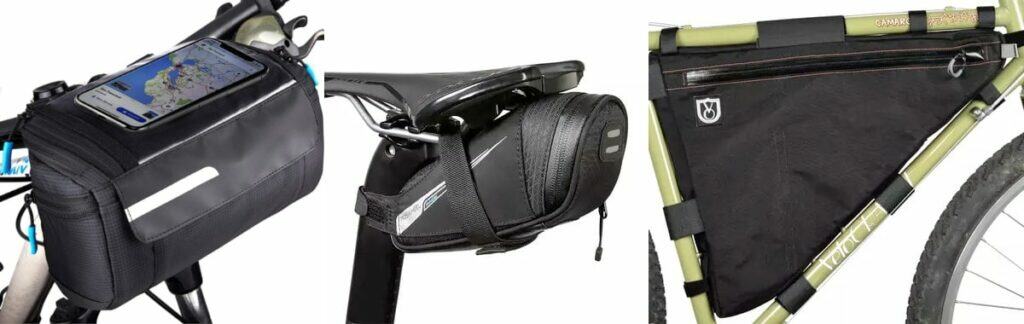
Bike-mounted Bags: When considering a bag that mounts to your bike frame, seat, or handlebars, think about how quickly you’ll need access to it and how much space you require. Your three options are handlebar bags, seat bags, and frame bags. Handlebar bags are the best option for quick access.
Handlebar, seat, and frame bags
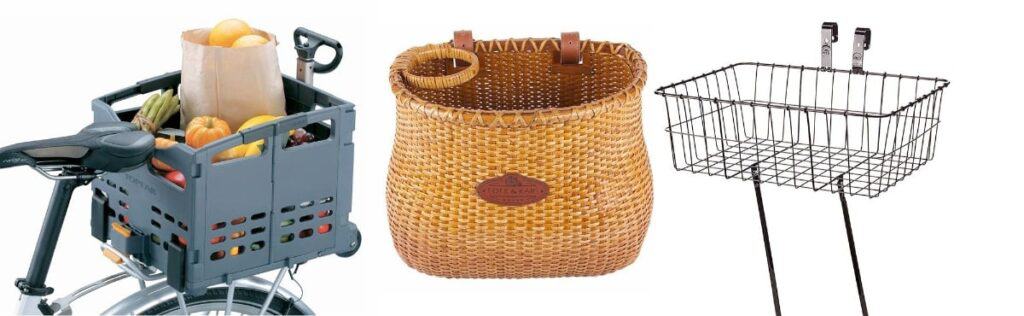
Baskets: Adding a basket to your bike is a lot like adding a trunk, but you can put one on the front or the back. Rear baskets almost exclusively require a rear rack. Being rack-mounted allows rear baskets to carry heavier loads without affecting your bike’s handling. Front baskets are handy, but if you’re carrying more than 15 pounds the weight could bog down the bike’s handling, making a rear basket a better option. If you suspect some of your cargo might bounce around or fly out of your basket, you’ll also want to think about purchasing bungee cords or a bungee net.
Rack-mounted rear basket, small woven front basket, classic front basket
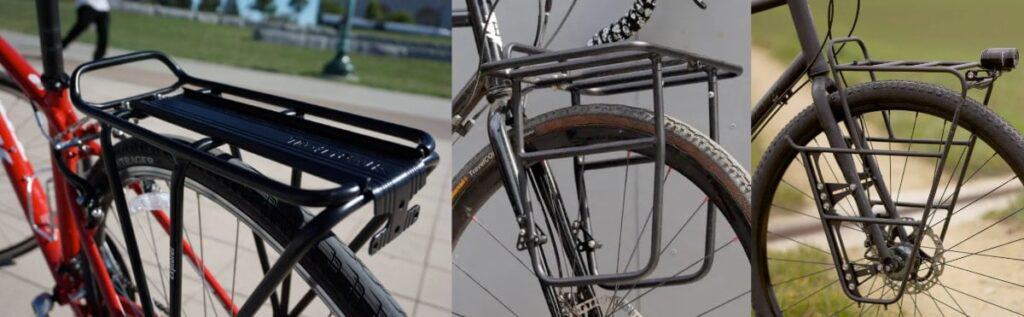
Racks: There are both front and rear racks. With a rear rack, you’re better able to attach panniers or secure crates or cargo to the top of them, which gives them better carrying capacity than front racks. Most rear racks are designed to carry at least 40 pounds. Where rear racks have one basic design, front racks come in a variety of shapes and sizes, allowing you to choose the design that best suits your needs – from a rack that can carry panniers to a platform you can strap cargo to. As for simple commuting, most people prefer a rear rack.
Rear rack and two different front rack designs
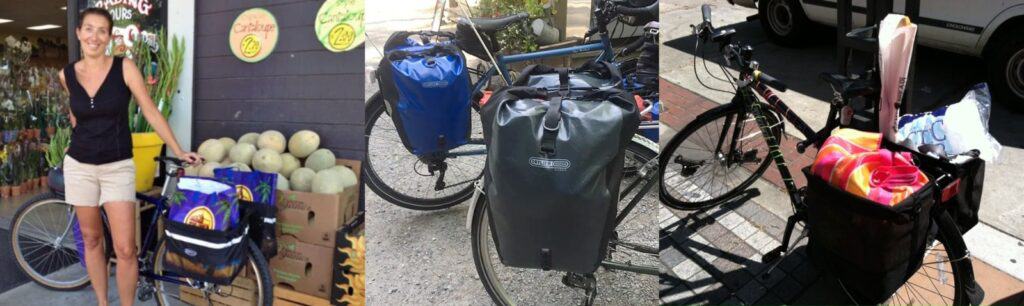
Panniers: Panniers are simply bags which mount to the side of a bike rack. They are often sold in pairs and come in a wide range of designs.
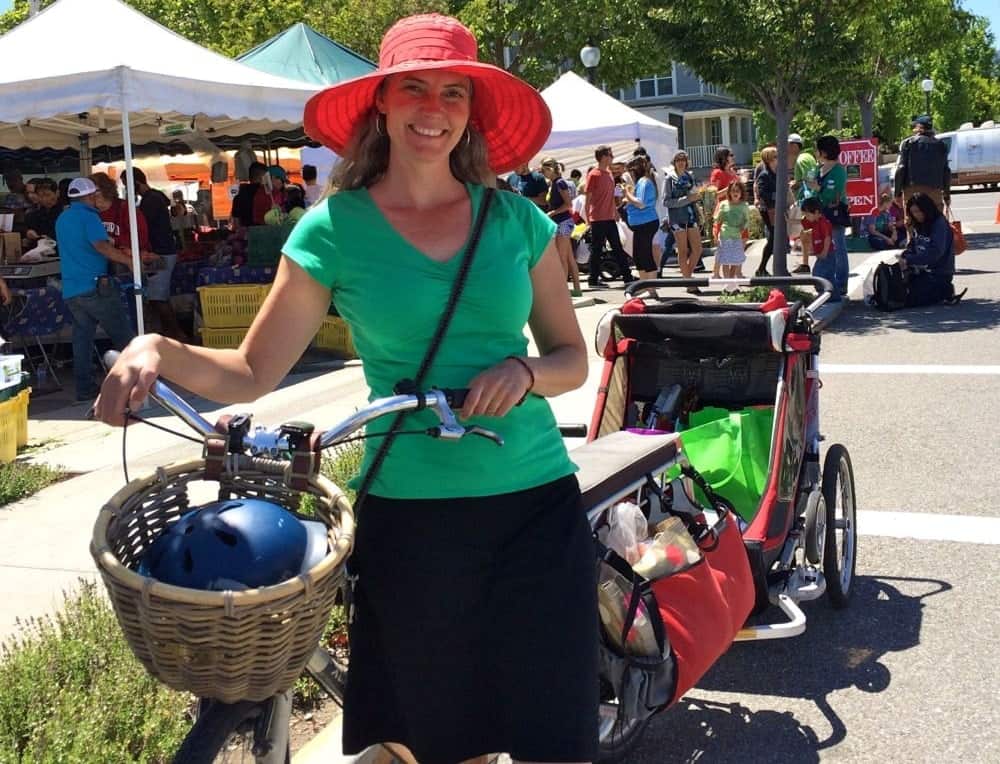
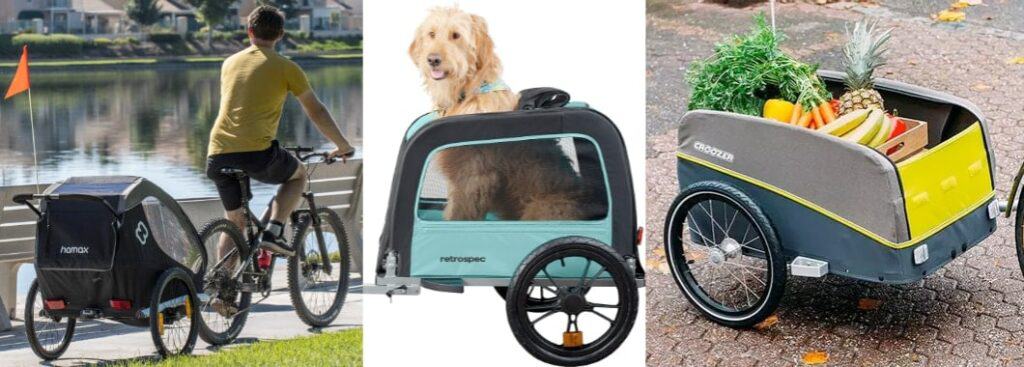
Trailers: There are bike trailers to carry just about everything, from pets, to kids, to cargo, and they have a number of advantages:
Compared to what you can easily pack onto a bicycle, a trailer has a much larger carrying capacity. Trailers can often hold up to 100 pounds.
Trailers can make it easier to carry irregularly shaped or bulky items which might be difficult or impossible to strap onto a bicycle.
Trailers are typically waterproof or weatherproof.
If there’s something you want to haul with a trailer (e.g. kayak) there’s a bike trailer out there that can handle it.
If you don’t like your bike looking ‘cluttered’, a trailer helps you avoid having to install any racks. When you’re not using the trailer, you just detach it.
Child carrier, pet trailer, cargo trailer
Cargo Bikes
Why Get a Cargo Bike: Although you can outfit your standard bicycle to replace your car for some trips, if you’re looking to swap out your car for most or all local trips, consider getting a cargo bike – especially if you’re planning on carrying passengers. Momentum Magazine provides a great explanation:
Cargo bikes… enable the transportation of many more pounds of goods than you could possibly carry on a regular bicycle, with much more economic and environmental efficiency than you get from a car. They’re your family vehicle, your work truck, your moving van, your party bus. They’re everything you would need a car for, but much more affordable, much more sustainable, and much more fun.
This isn’t an idle boast. With available accessories like removable child seats, passenger handlebars, cargo bags, and electric assist, a cargo bike can truly become whatever you need it to be. And if your needs change, you can easily adjust the bike’s setup to meet them.
Types of Cargo Bikes
While there are a variety of cargo bike designs, there are essentially three which are popular in the United States – longtails, Bakfiets (aka box bikes), and cargo tricycles.
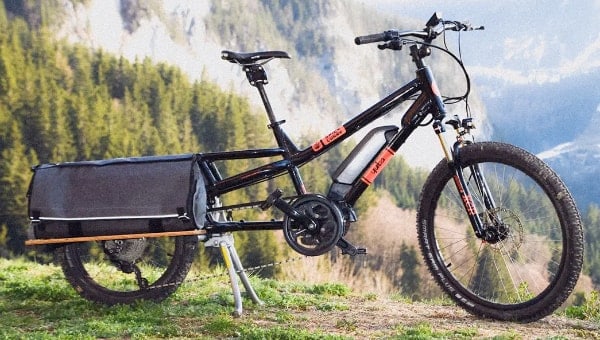
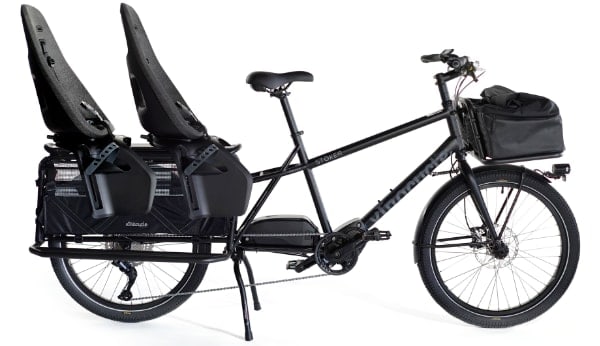
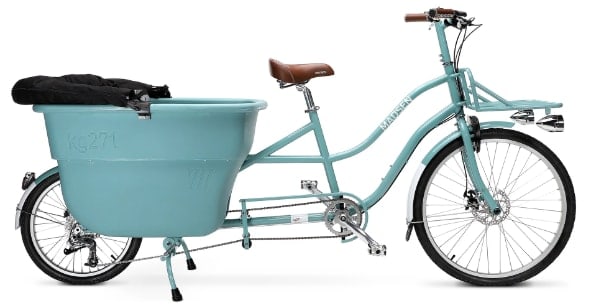
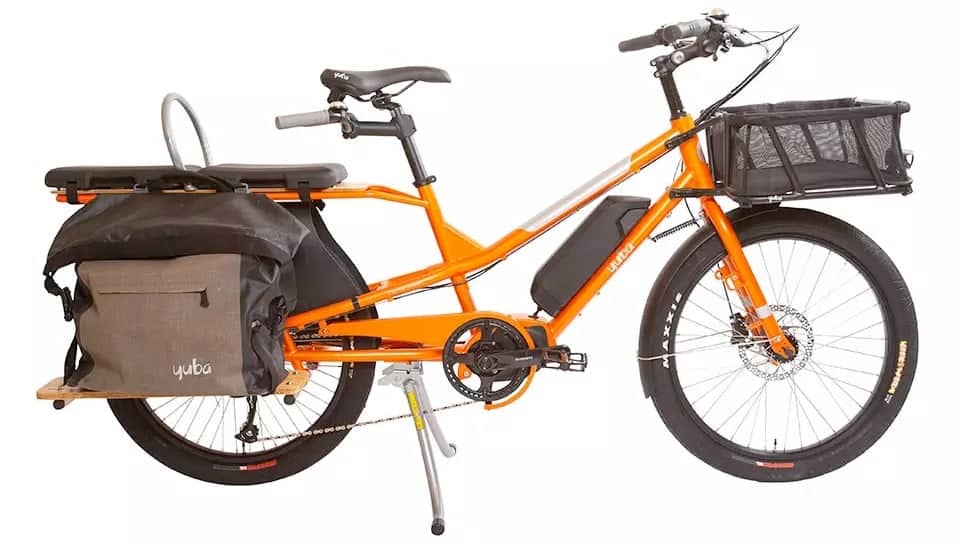
Longtails have an extra-long wheelbase at the back, which accommodates an extended, built-in deck to carry cargo or children. Longtails typically come with panniers to hold cargo at the sides, have hooks for webbing to secure cargo on top, and have options for handles or backrests to transport children.
Photo courtesy Yuba Bicycles
Photo courtesy Xtracycle
Photo courtesy MADSEN Cycles
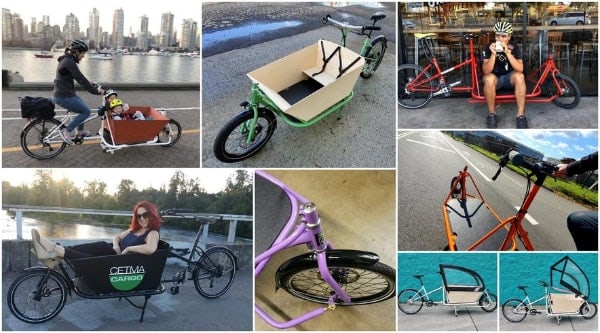
Bakfiets (or box bikes) have an extraordinarily long wheelbase at the front and a smaller front wheel, with the cargo area or an attached wooden basket sitting low to the ground between the handlebars and front wheel.
Photo courtesy Cetma Cargo
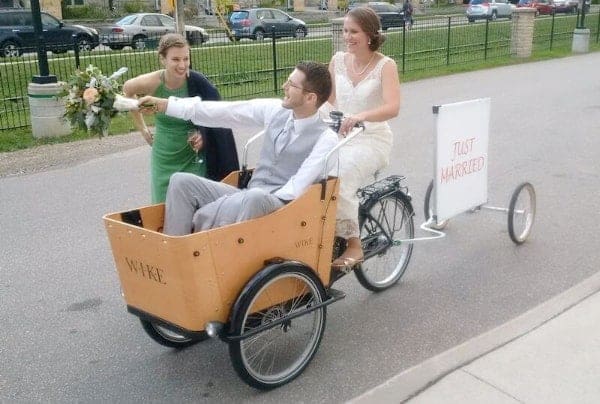
Cargo Tricycles usually feature an elongated frame with two wheels at the front or back for added stability, with a cargo platform, box, or seat between the two wheels. Although cargo tricycles are slowly gaining popularity in the United States, if you’ve encountered one it’s most likely been in the form of a pedicab.
The beauty of a cargo bike is that you can load it up with people, groceries, and cargo and it can handle it. But you still have to do the pedaling. It’s important that you feel comfortable pedaling your cargo bike no matter how heavily it’s loaded, how far you’re going, or what the terrain is.
If you think you’ll sometimes need a boost while pedaling, electrifying your cargo bike is a simple, cost-effective solution. It’s so popular that most cargo bike companies offer electric pedal assist as a preinstalled option. If you already own a cargo bike, you can retrofit it with an electric pedal assist kit or have a bike shop do it for you.
While the price tag on an electric cargo bike is not low, it still costs dramatically less than owning a car.
Photo courtesy Yuba Bicycles
Rebate for Electric Cargo Bikes
Contra Costa residents who purchase a new electric cargo bike are eligible for a rebate of up to $500 through 511 CCTA’s E-Bike Rebate program. Applying for the rebate is quick and easy. Learn more about the program.
Buying a Cargo Bike
If you’re thinking of buying a cargo bike, you’re likely going to do some online research. We can help get you started with Bicycling Magazine’s most recent Best Cargo Bikes review. It features brands like Rad Power Bikes, Tern, Xtracycle, Surly, Yuba, and Benno.
Test Ride Information
When it comes to finding a test ride for a specific brand of cargo bike, be aware that each brand does things a bit differently. Some brands (like Yuba) are sold through bike shops, while others (like Xtracycle and Rad Power Bikes) only offer test rides at their own locations. If you’re having trouble determining where you can find a test ride, visit the bike company’s website and contact customer support.
Tern: At bike shops in Martinez, Berkeley, Oakland, Alameda, SF, Larkspur, Fremont, and Hayward
More and more people are returning to BART, with a host of improvements waiting for them when they get back on board.
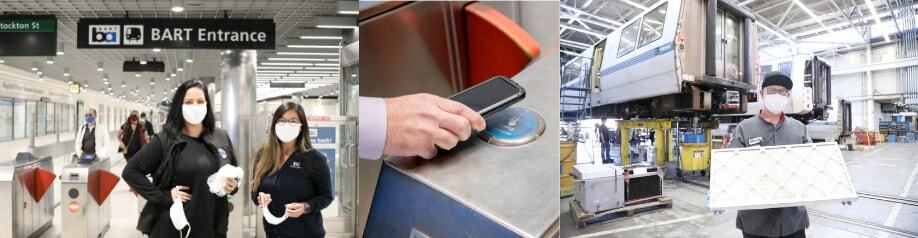
Riders returning to BART will enjoy a variety of improvements made as part of BART’s Welcome Back Plan. Some of these will be easy to spot, but many of them – like air filters dense enough to remove virus particles – are behind-the-scenes changes which make travel by BART safer or more convenient.
One of the most important changes from the last year is BART’s return to near-regular service. Monday through Saturday, BART is back to pre-pandemic service frequency with trains running until midnight. They have also added new trips on Saturdays to reduce wait times. Currently, BART closes at 9pm on Sundays, but a midnight closure will return on February 20.
Here are some other changes which benefit BART riders:
The air in BART cars is replaced every 70 seconds and cleaned with upgraded air filters.
iPhone and Android users can now use their phone or Apple Watch at the fare gates to pay for BART. Riders can immediately load funds to their Clipper card when using Clipper on their phone.
An increased number of safety staff, including BART Ambassadors and BART Police, are monitoring activity on trains and handing out masks to anyone not already wearing one. In case of emergency, riders can now text BART Police at 510-200-0992, call them at 510-464-7000, or report an issue using the free BART Watch app.
Many BART parking lots have available spaces, and riders can pay daily parking fees with the official BART app.
While bikes are allowed on all BART trains, you can also Secure Your Cycle at the BART station in an electronic bike locker with a free BikeLink card from 511 CCTA.
BART service was extended into Santa Clara County with the opening of two new stations: Berryessa/North San Jose and Milpitas.
BART is upgrading and reopening restrooms that have been closed at some stations.
If you’re thinking of getting back on BART, you might be eligible for $50 in Clipper funds. Pledge to ride BART at least one day a week in place of a drive-alone trip and you could be eligible for the Jumpstart Your BART incentive.
With 2022 just around the corner, we highlight two things that come with the new year – an increase in Bay Area bridge tolls and new laws that affect drivers.
Bay Area Bridge Tolls: Tolls at the region’s seven state-owned toll bridges will go up by $1 on January 1, 2022. Regular tolls for cars, trucks, and motorcycles at the San Francisco-Oakland Bay, Antioch, Benicia-Martinez, Carquinez, Dumbarton, Richmond-San Rafael, and San Mateo-Hayward bridges will increase to $7.
One law that went into effect on July 1, 2021, is worth mentioning specifically:
Points for distracted driving: Violating the hands-free law for a second time within 36 months of a prior conviction for the same offense will result in a point being added to a driving record.
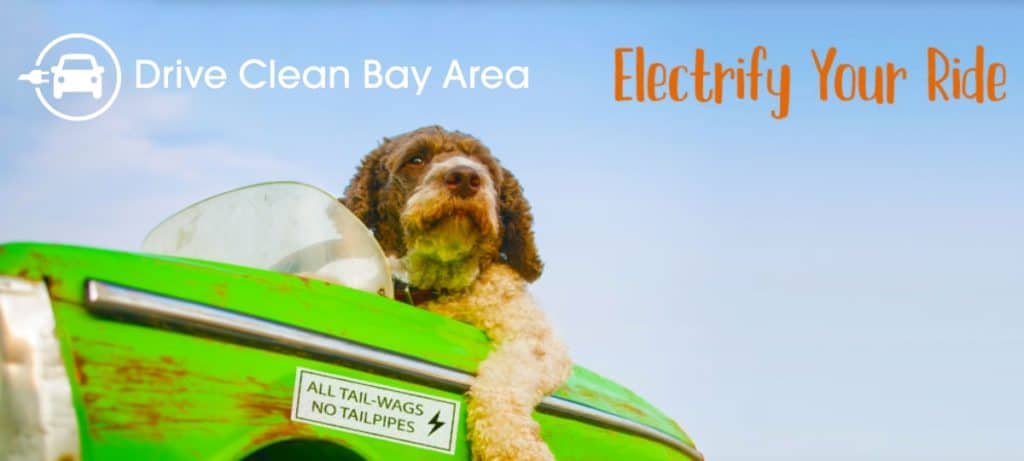
If you’re considering making the switch to driving electric, Drive Clean Bay Area hosts a series of virtual events to help you find the right electric vehicle for your budget and lifestyle. These events are online, free, and open to the public.
Click any link below to see upcoming events in that series of webinars:
EV 102 – New EV Owner Workshop: Just made the switch to an EV? Long-time EV owners and experts make your transition to driving electric smooth.
If you have questions and can’t make it to one of these Zoom webinars, email Drive Clean Bay Area at info@drivecleanbayarea.org.
E-Bike Rebate: If you purchase an e-bike or have an e-bike conversion kit professionally installed, be sure to apply for a rebate from 511 CCTA. Rebates of up to $300 are available while supplies last. Learn more at 511cc.org/rebate.
Last year, 600,000 e-bikes were sold in the United States, which works out to one e-bike sold every 52 seconds. For the majority of buyers, this isn’t about cycling as much as investing in mobility:
“Most of the e-bikes being sold are being used for transportation, not recreation. They are often replacing cars on commutes to work or to the store.”
With a much lower price tag than an electric vehicle (EV), the e-bike is a cost-effective way to go electric, save money, and help improve air quality:
“E-bikes can offer a cheaper alternative to car travel… [and] can be useful tools for reducing CO2 emissions, urban noise, and inner city traffic. Lastly, e-bikes encourage users to cycle farther and more often than conventional bicycles.”
If you’re interested in buying an e-bike, 511 CCTA wants to help. We’re currently offering cash rebates of up to $300 on the purchase of a new e-bike. What brand of e-bike you buy and where you buy it is up to you, just be sure to save the receipt so you can apply for your rebate.
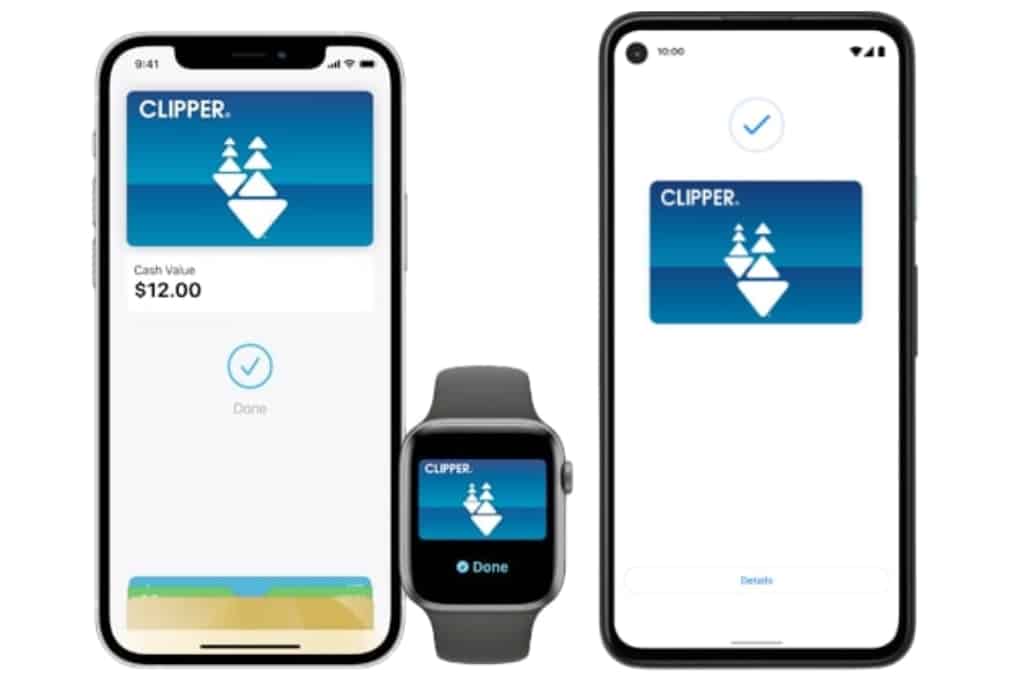
If you have an iPhone, Apple Watch, or Android phone, you have the option of paying your transit fare using your mobile device instead of a plastic Clipper card. To help you decide if you’re ready to move your Clipper account to your phone or smart watch, here are some of the benefits, as well as some important reminders.
If You Have Your Phone, You Have Your Clipper Card
You no longer have to worry about forgetting or losing your plastic Clipper card. If you’ve got your phone or Apple Watch, you’re ready to use Clipper.
Adding Funds Is a Snap
Adding funds to your Clipper account takes only seconds with Apple Wallet and Google Pay. It saves you the time and trouble of finding a Clipper machine or visiting a website.
Added Funds Are Available Instantly
Because your Clipper account is connected to Apple Wallet or Google Pay, when you add funds to your Clipper account, they’re available instantly.
No Need to Unlock Your Phone to Use Clipper
To pay using your phone or Apple Watch, you don’t need to unlock your phone. With an Android phone, you only need to turn your phone screen on before holding it up to the Clipper reader. If you’re using an iPhone or Apple Watch you don’t even need to do that.
Things to Know Before Setting Up Your Mobile Device
Plastic Card Deactivation – Once you have transferred a plastic Clipper card to your mobile device, the plastic card can no longer be used at Clipper readers. If you want to be able to use both a plastic card and your phone, you should add a new Clipper card to your phone in Apple Wallet or Google Pay.
Transferred Plastic Cards Still Unlock BikeLink Lockers – If you use your Clipper card to unlock BikeLink eLockers, it will still work after you’ve transferred the card to your phone.
Android Smart Watches Not Supported – You can use an Apple Watch to pay your fares at Clipper readers, but that option doesn’t currently exist for Android smart watches.
If you’re ready to make the switch, the Clipper website offers simple step-by-step guides which help walk you through the process of transferring a plastic Clipper card to Apple Wallet or Google Pay. For more information about using Clipper on your phone, including an extensive FAQ, visit the Clipper website.
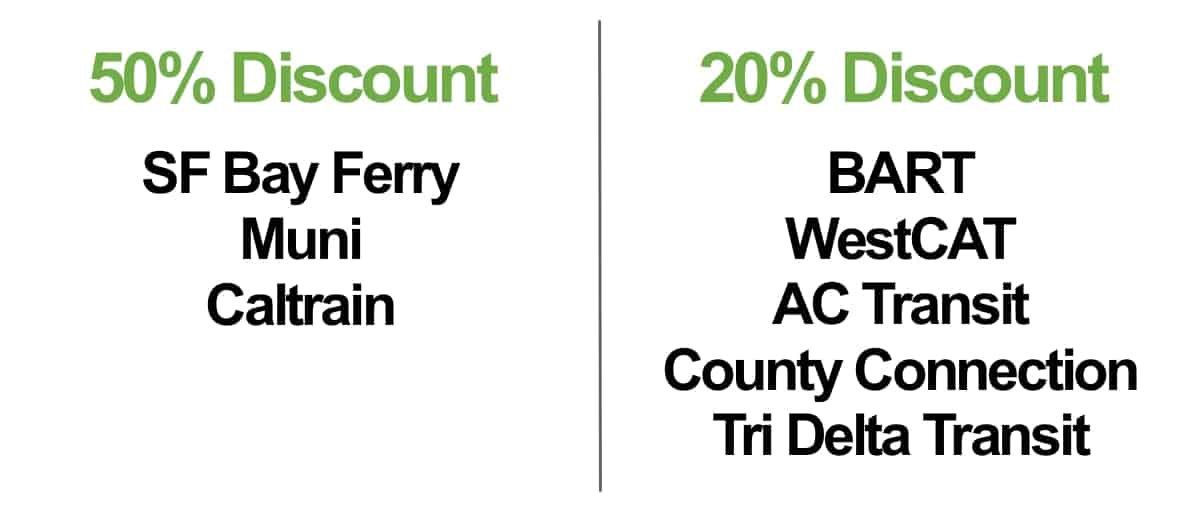
Clipper START is a pilot program which provides single-ride transit discounts on all Contra Costa transit agencies, as well as BART, SF Bay Ferry, and others. Bay Area residents age 19-64 who meet certain income requirements can apply for the program and save up to 50% on local fares.
With a Clipper START fare card, riders can receive single-fare discounts from 20% to 50%. Households of four making $53,000 or less annually qualify for the program. Learn more and apply online at clipperstartcard.com.
With 2021 now upon us, you should be aware of these three new laws affecting motorists:
Unattended children in motor vehicles: Exempts a person from civil or criminal liability for trespassing or damaging a vehicle when rescuing a child who is 6 years old or younger in immediate danger from heat, cold, lack of ventilation, or other dangerous circumstances. [Effective Jan. 1, 2021]
“Move Over, Slow Down” amendments: The “Move Over, Slow Down” law has been expanded to apply to local streets and roads. Drivers approaching a stationary emergency vehicle displaying emergency lights, including tow trucks and Caltrans vehicles, must move to another lane when possible, or slow to a reasonable speed on all highways, not just freeways. [Effective Jan. 1, 2021]
Points for distracted driving: Beginning July 1, violating the hands-free law for a second time within 36 months of a prior conviction for the same offense will result in a point being added to a driving record.
For more information on new driving-related laws taking effect in 2021, click below.
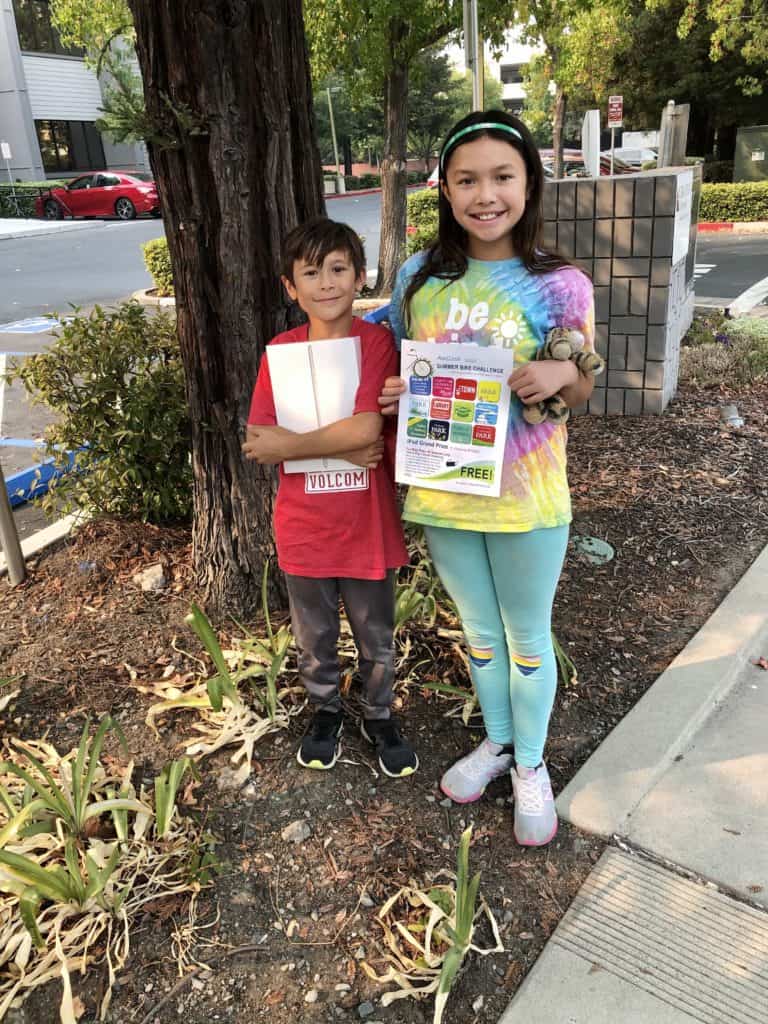
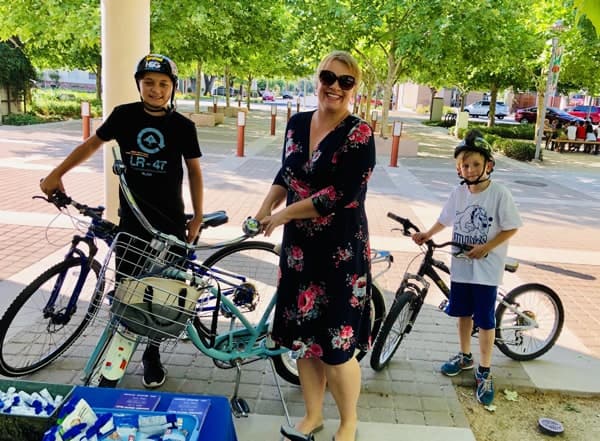
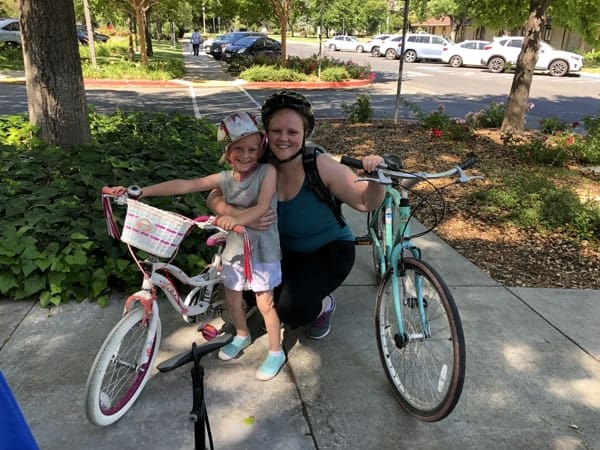
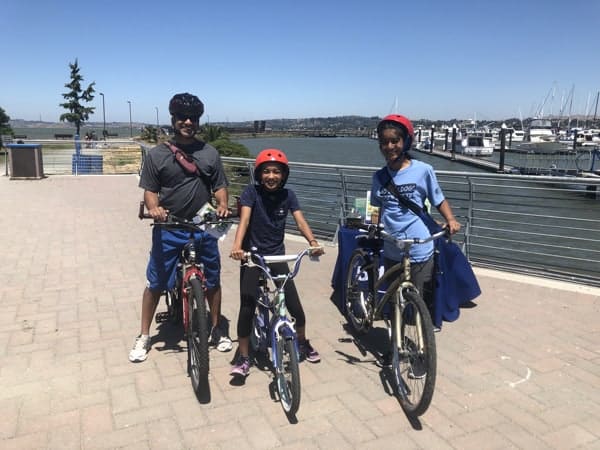
Despite COVID, 2020 Summer Bike Challenge was a big success! We’d like to thank everyone who helped make that possible.
“We’ve participated in this for several years now and are SO happy you figured out how to do it again!” -Michelle Youngman, Oakley
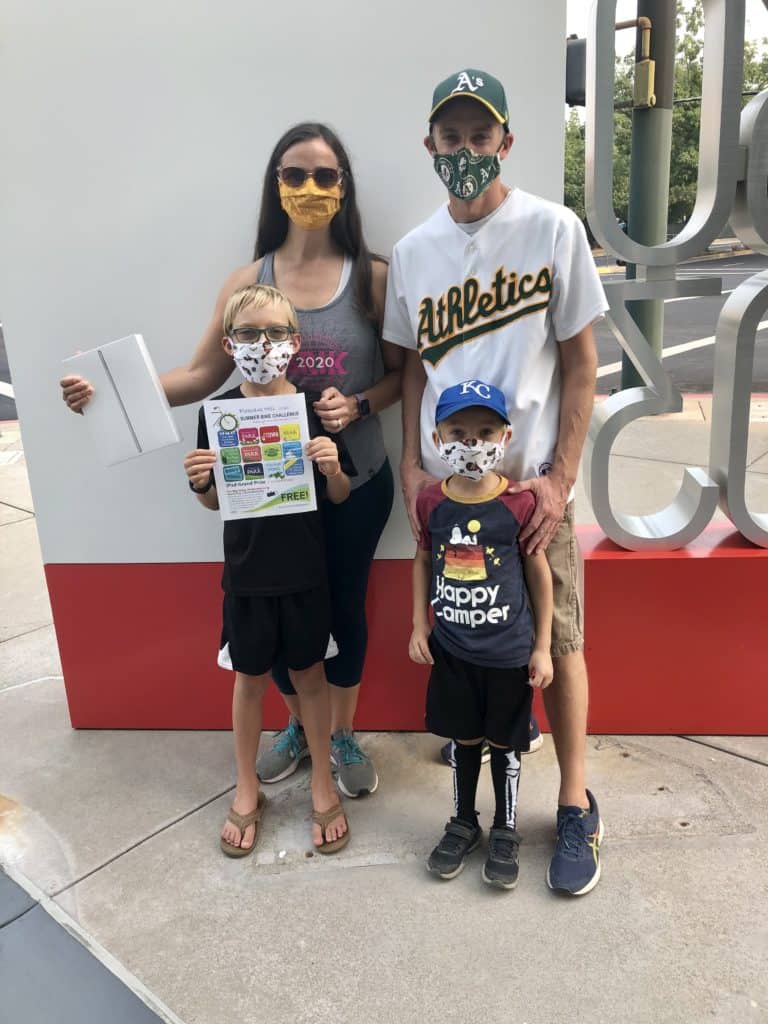
While so many other recreational programs, activities, and summer vacations were canceled due to COVID, we received great photos and heartwarming comments from hundreds of participants. Riders were happy and grateful for a healthy and fun program that got them outside, active, and doing something fun during these otherwise strange times.
If you didn’t get enough biking this summer, or just want to ride your bike to more places, visit our Biking page for resources and tips on how to get going. You can also find lots of bike rides and bike-related events on our Bike Events page.
“Thanks for organizing this challenge. What a great activity we could have to give us something positive to do this summer with all the other restrictions.” -Julie Erwin, Walnut Creek
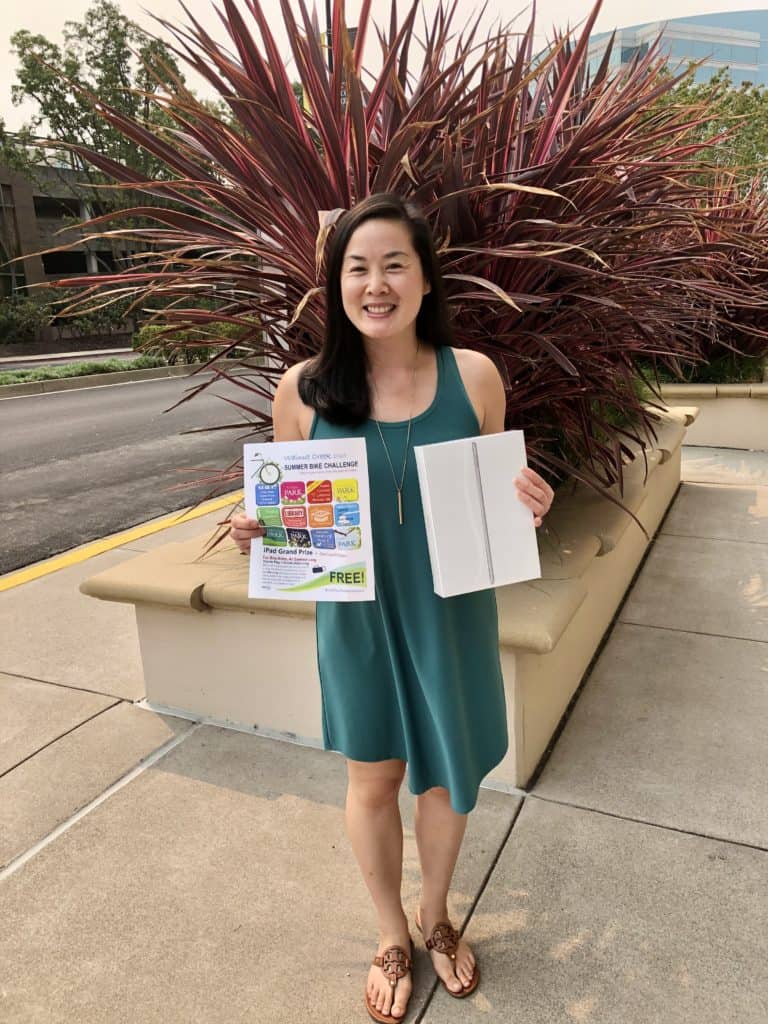
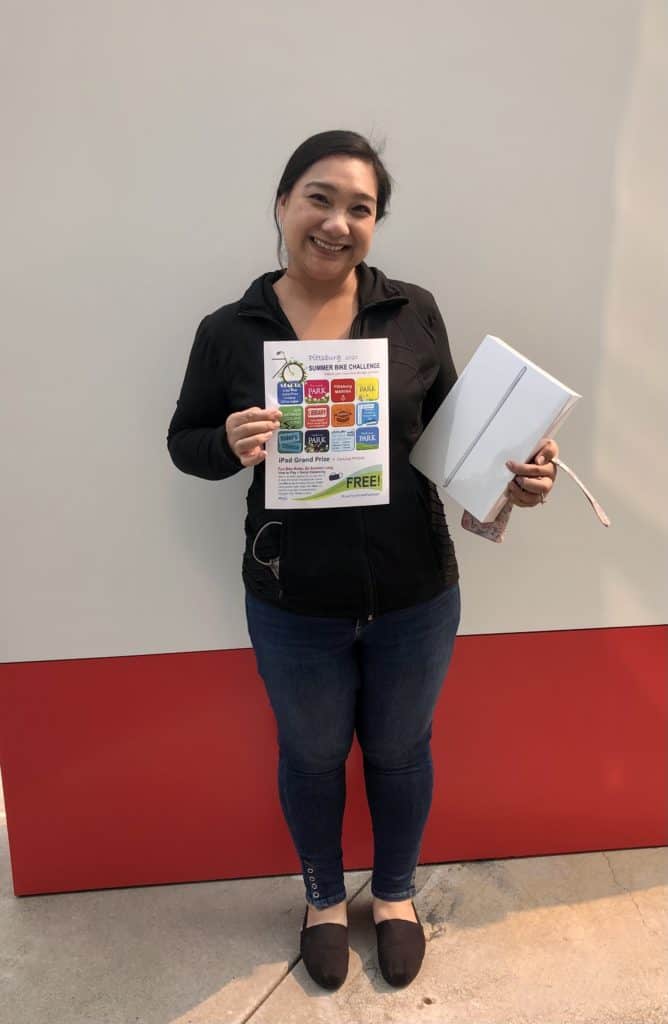
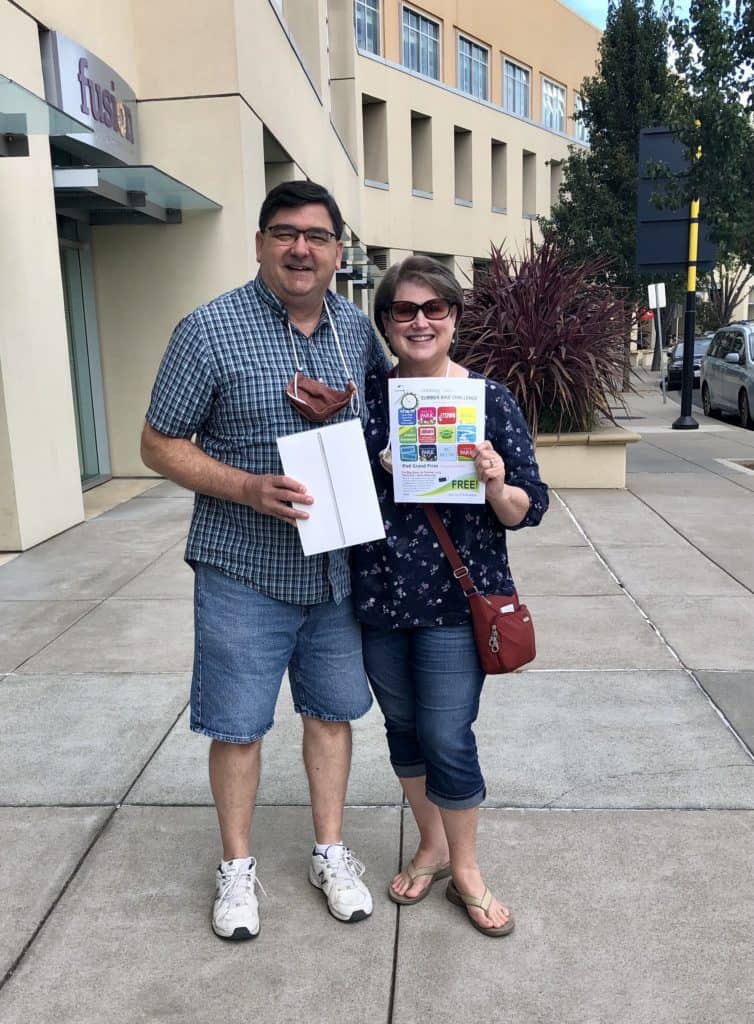
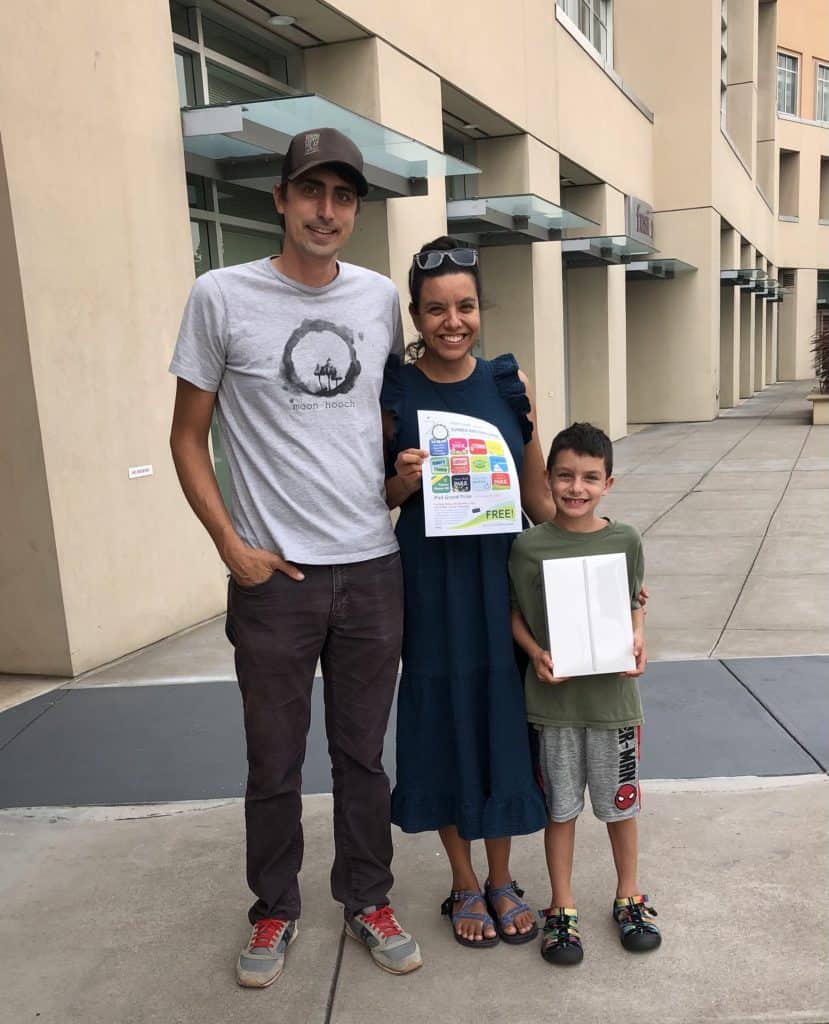
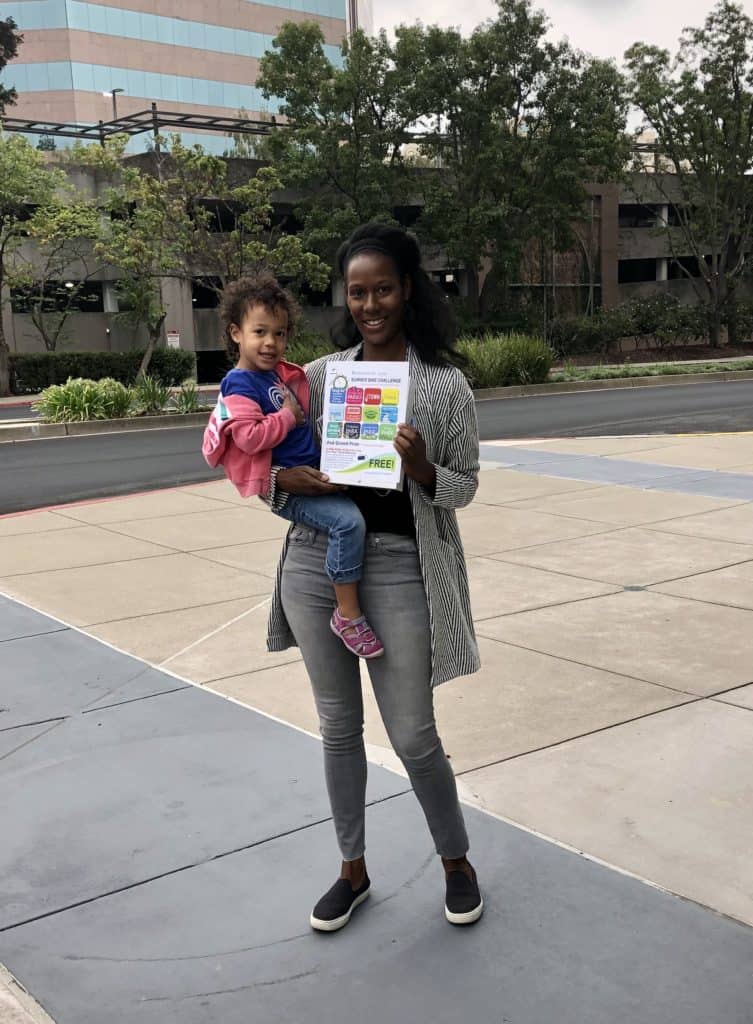
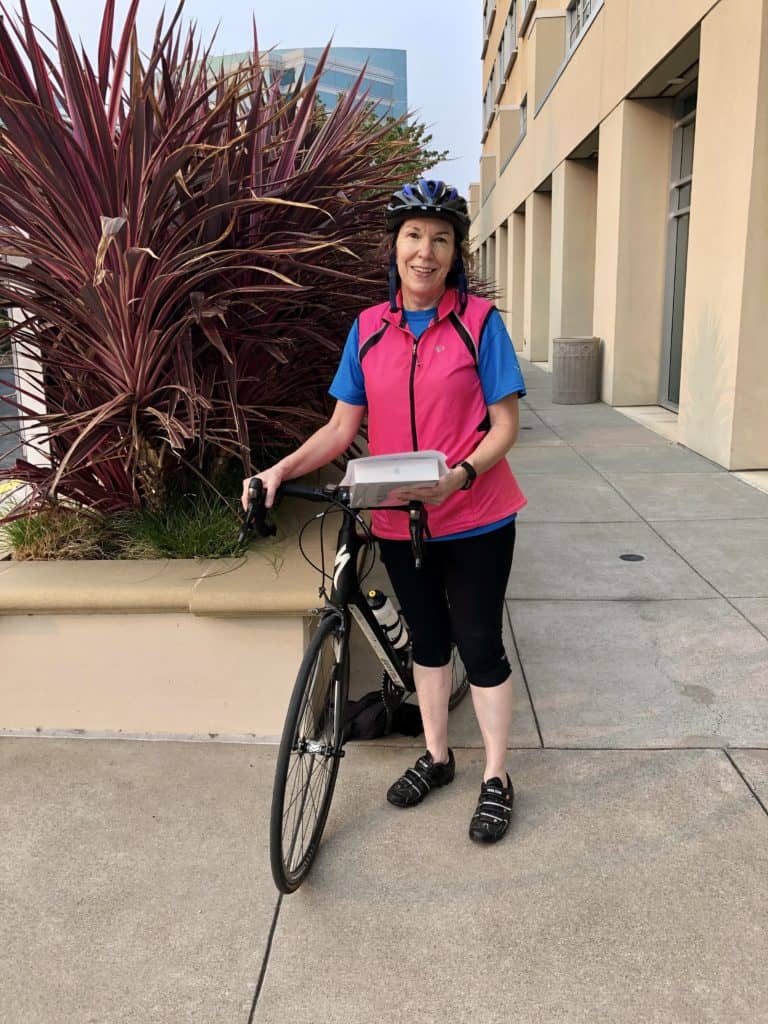
All registered participants were entered in a random drawing for an iPad, with one winner per city. Read about each of the eight winners and what inspired them to get on their bikes this summer.
The Summer Bike Challenge is an annual event that encourages people of all ages to get out on their bikes to enjoy healthy, no-cost summer recreation while experiencing pollution-free transportation.
The Challenge provides participants with destination ‘bingo cards’ full of interesting places to ride with special ‘Free Stuff’ prize opportunities along the way. While COVID prevented us from hosting our usual in-person prize events, we still found a way to keep the fun going by exchanging prizes for biking selfies.
If you live near Richmond and your workplace is in San Francisco, here’s a good question:
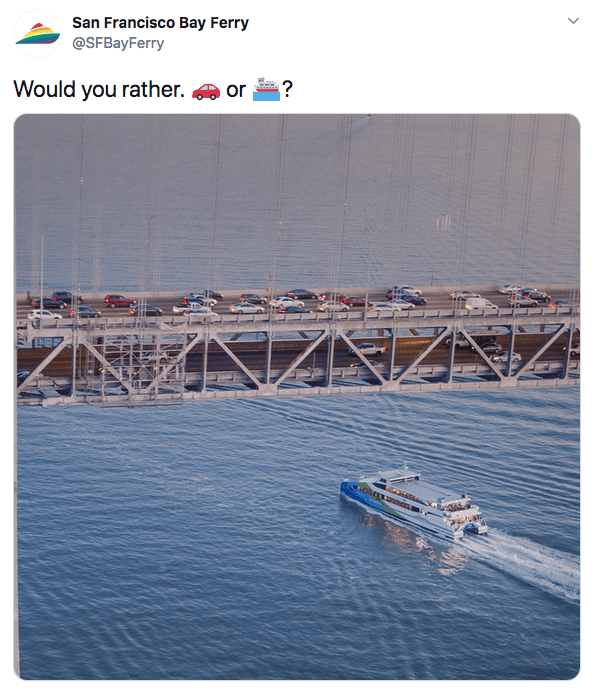
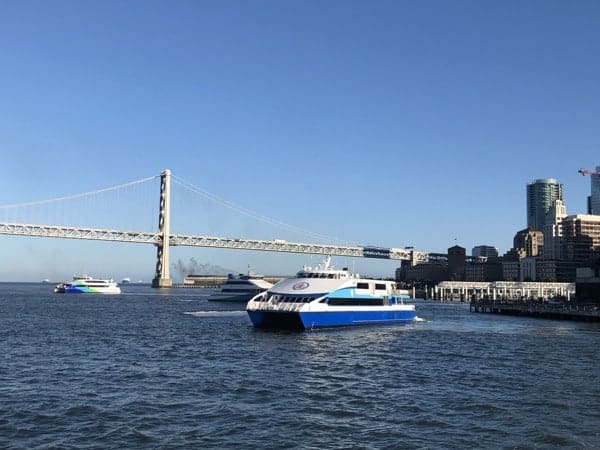
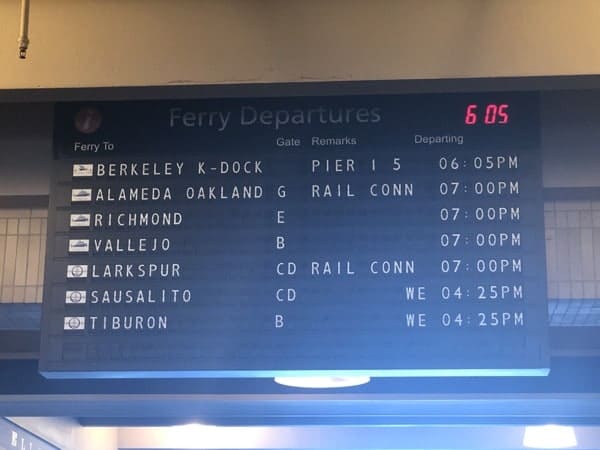
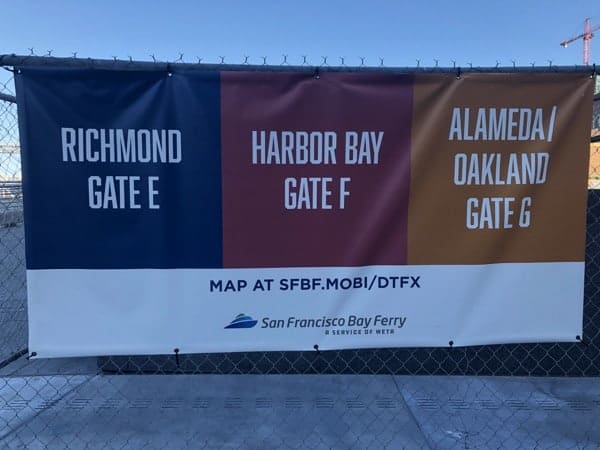
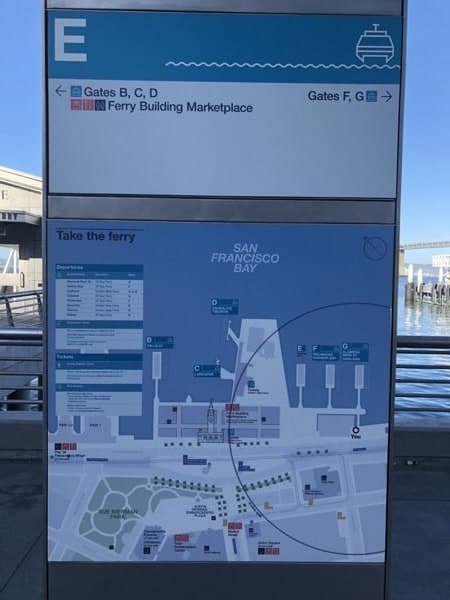
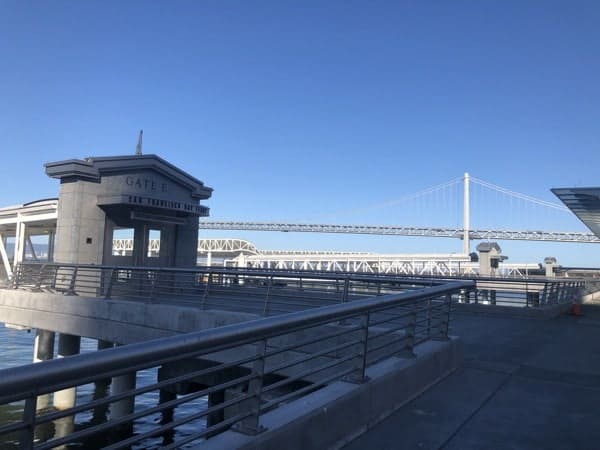
The Richmond ferry is back in service, and if your workplace is San Francisco it’s a great way to get to there. Regular riders talk about the comfort, convenience, and calming atmosphere of the ferry, so we took a trip on the recently reopened Richmond ferry. Below we share our experience, including photos from the trip:
Safe, Clean, and Plenty of Space
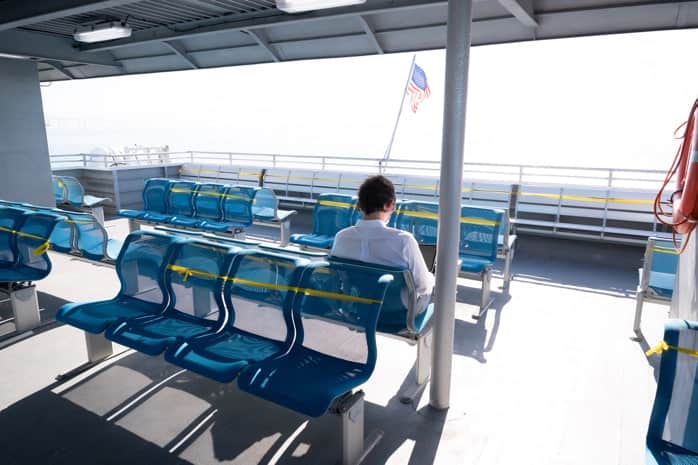
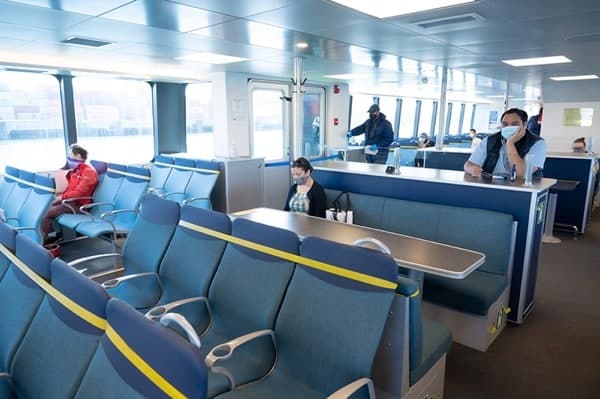
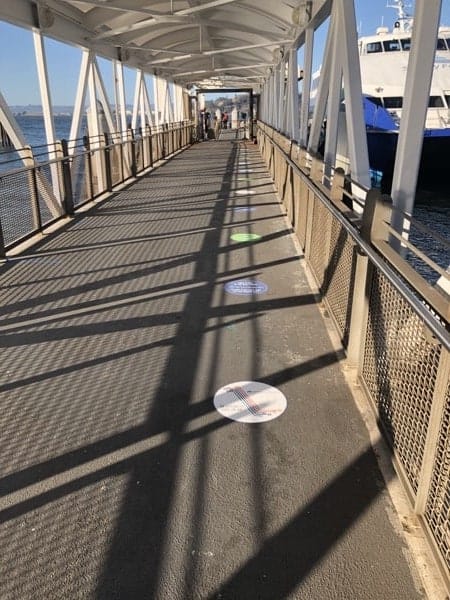
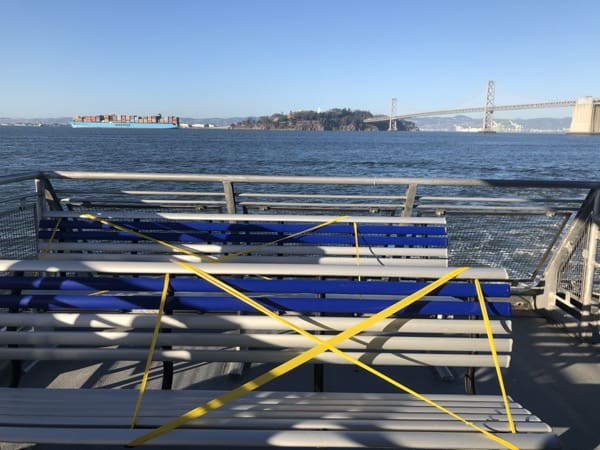
Health and safety are a key concern for commuters right now, and the Richmond ferry definitely feels safe and clean. The effects of their six-point Passenger and Crew Safety Plan were obvious when looking around the ship. All passengers and crew had masks, alternate rows of seats were taped off to ensure social distancing, hand sanitizer stations were available to passengers, and we saw surfaces being sanitized during our trip.
Photos courtesy San Francisco Bay Ferry
Quick, Pleasant Trip and Cheaper with Clipper
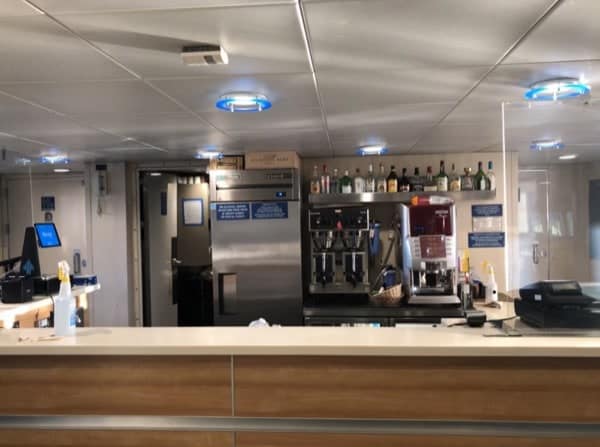
The trip between San Francisico and Richmond took 35 minutes from gate to gate, and it was nice to have both legroom and the ability to get up and walk around (as well as free WiFi). We didn’t visit the snack bar, but we could see the benefit of being able to grab a morning cup of coffee or evening snack.
We used our Clipper cards to pay for our trip, which meant we didn’t have to buy a ticket in advance and automatically received the Adult Clipper card fare ($7) which is a substantial savings over the cash fare ($9.30).
Getting to the Richmond Ferry Terminal
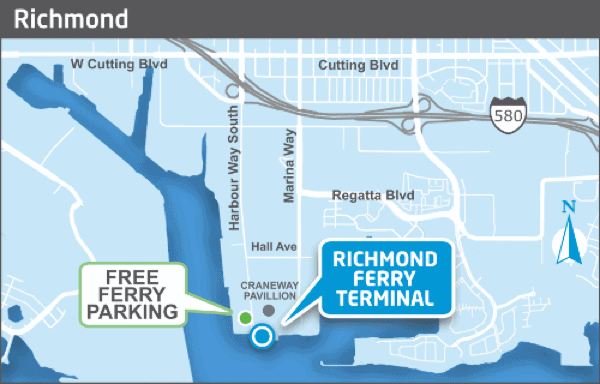
The Richmond Ferry Terminal is on the Bay Trail (1453 Harbour Way South), so you can get there easily by bike or scooter. If you don’t want to bring your bike on the ferry, there are 20 BikeLink electronic lockers available in addition to bike racks. AC Transit Line 74 can also get you to the ferry, connecting from central Richmond and the Richmond BART station.
Free parking is available for ferry customers, with 362 spaces, and spots are available on a first come, first served basis. The lot is unattended and there’s no way to find out in advance if the lot is full or near full, so keep that in mind.
Image courtesy San Francisco Bay Ferry
Bring Your Bike, Board, or Scooter with You
We didn’t bring a bike on board this time, but it’s a great option to have. Covering that first mile/last mile between the ferry terminal and your destination is snap when you have your bike, e-bike, scooter, or e-scooter with you (which are all allowed on board). We were told that space may be limited on some departures for these vehicles, so just be sure to arrive early.
More Information
We loved taking the Richmond ferry and we think you will too. If you need more information, check out SF Bay Ferry’s Rider Quick Start Guide or visit the schedule page for the Richmond Ferry.
Thanks to the efforts of people throughout the Bay Area, we’ve been able to flatten the curve. Those people include public transit operators and riders.
Our local transit agencies implemented cleaning, boarding, and social distancing protocols to keep drivers and passengers safe, and transit users wore masks, looked out for their drivers, and limited their travel to essential trips.
Now that shelter-in-place restrictions are being relaxed, people will be making more trips. The good news is that transit is ready to get you where you need to go.
The stepped-up cleaning and disinfecting procedures transit agencies have been using will remain in effect. This way, when you return to using public transportation, you can be confident everything possible is being done to protect your health, and that of the drivers and other passengers.
We’re happy to help you plan your trip, learn about commuter incentives, and even set you up with a pre-loaded Clipper card for pledging to try transit. For more information, visit our Public Transportation page.
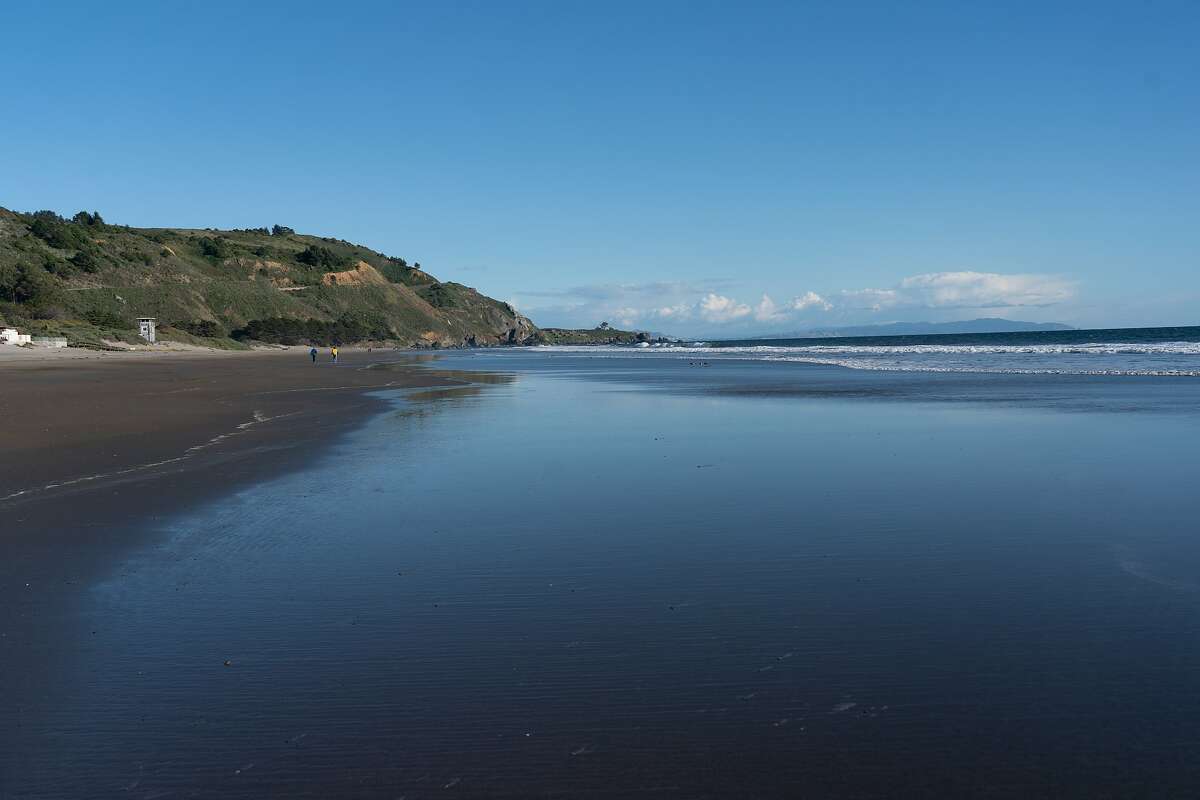
If the sky seems a little bluer these days, it’s not your imagination. With significantly fewer vehicles on the road, Bay Area air quality is better now than it was two months ago. If you’re enjoying the change in the air, there are many simple things you can do to help preserve our air quality gains, even after shelter-in-place restrictions are lifted and more cars return to the road.
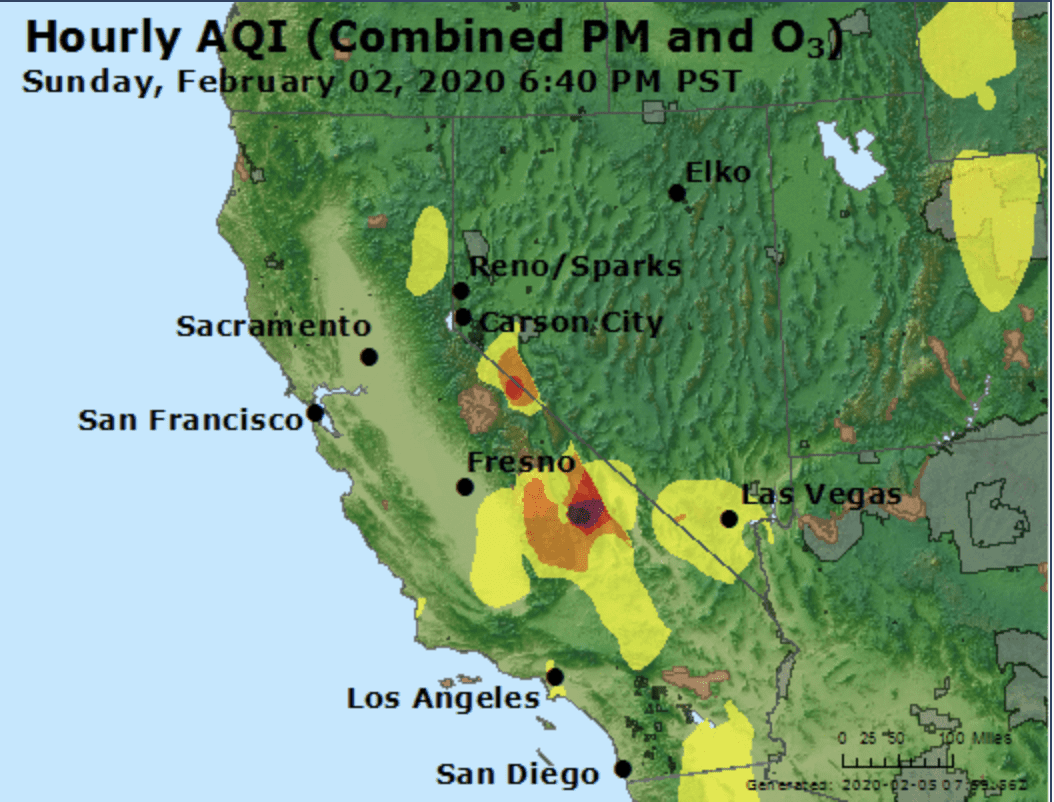
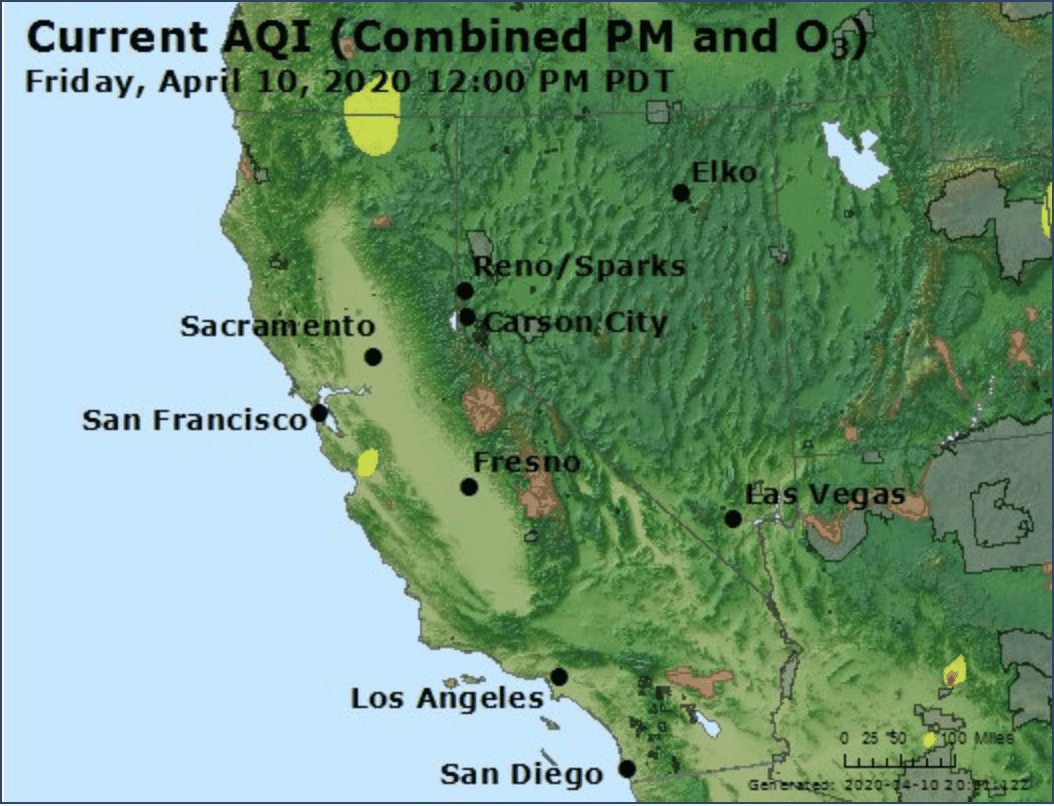
The Bay Area Air Quality Management District (BAAQMD) estimates there’s been a 70% drop in bridge traffic, which would correlate with a 26% drop in carbon dioxide emissions and a 20% reduction in fine particulates (PM2.5). The result? Cleaner air and clearer skies.
Side-by-side comparison of the Air Quality Indexes (AQI) on Feb. 2 and Apr. 10
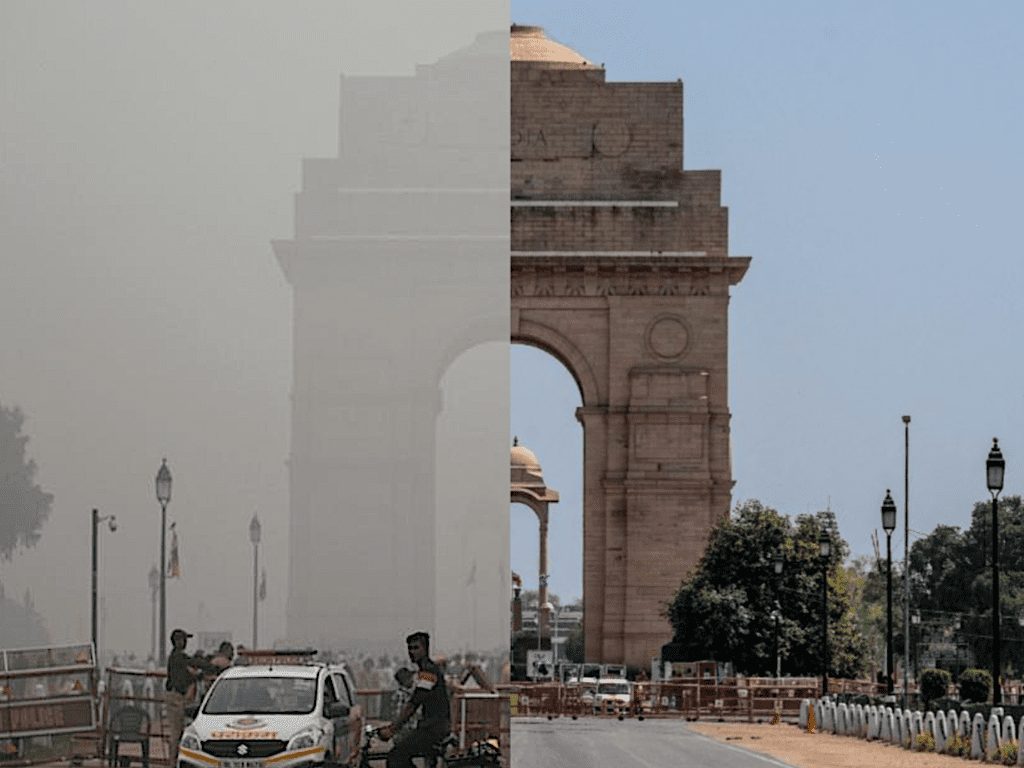
Similar air quality improvements have been seen in cities around the world. Los Angeles, famous for its smog, enjoyed its longest run of good air quality days since 1995. The Northeastern US experienced a 30% drop in air pollution in late March while China saw pollution levels fall nearly 40% between January and February. In Delhi, India, the persistent cloud of pollution (which can normally be seen from space) cleared away to be replaced by fresh air and blue skies.
Nitrogen dioxide (NO₂) measurements from the European Space Agency’s Sentinel-5P satelliteDelhi, India, before and after the national lockdown
Although much of the Bay Area’s improved air quality can be attributed to eliminated commute trips, some of it is due to changes in local travel. Multiple vehicle trips are frequently being combined into single trips, and for short trips, many people have switched to walking or biking.
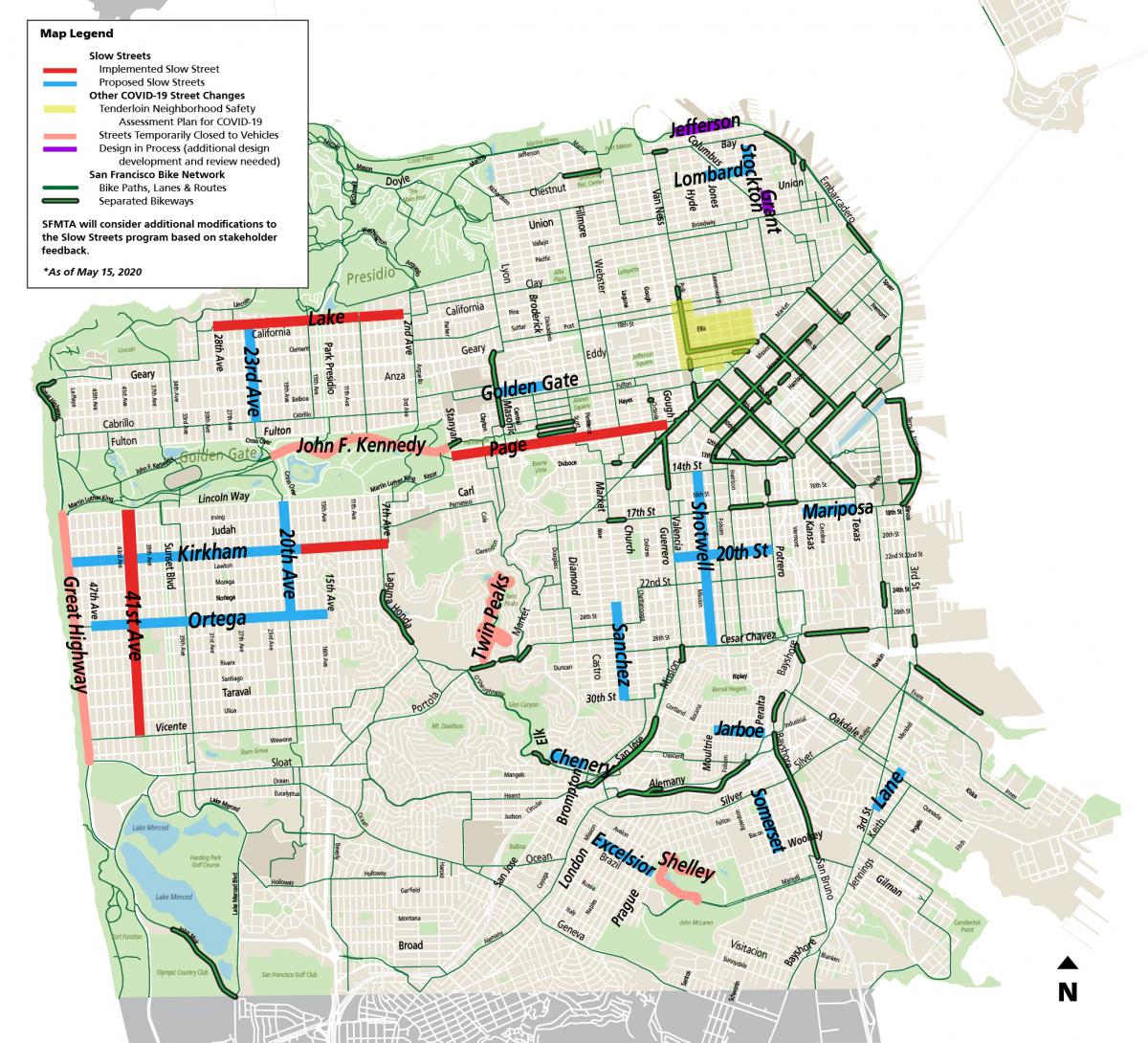
The uptick in cycling is so dramatic that bike shops nationwide are reporting record bike sales, and bike manufacturers are running out of inventory. In response to the increased numbers of walkers and cyclists, some cities—including San Francisco, Oakland and Alameda—have implemented Slow Streets programs, which limit vehicle through traffic on designated residential streets so people can travel easily while maintaining six feet of social distance.
A map of San Francisco’s Slow Streets program
As shelter-in-place restrictions are removed and people return to their commutes, some increase in tailpipe emissions is inevitable, but there are actions you can take on the road, at home, and at work to help preserve our improved air quality. The California Air Resources Board’s list of Simple Solutions to Reduce Air Pollution is a good resource for getting started. It includes many actions you can take, like working from home, limiting the amount of time your vehicle idles, and turning off lights when leaving a room.
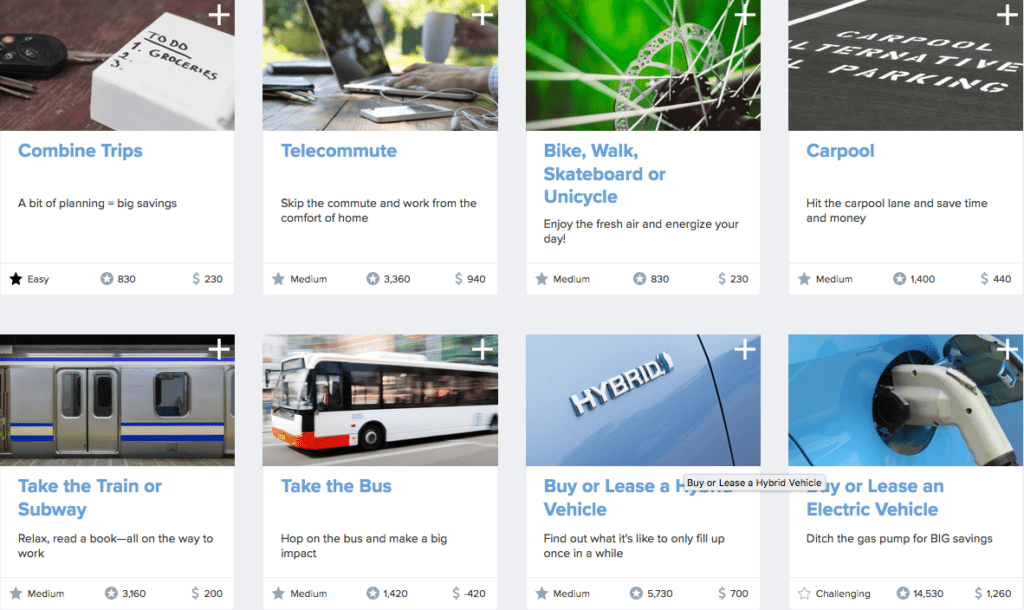
Another easy way to start making air-sparing changes is by joining the Cleaner Contra Costa Challenge. With actions divided into categories like Transportation, Renter Friendly, and Easy, you’ll find things you can do which fit your lifestyle and budget. For additional encouragement, be sure to join the 511 CCTA Community Group after creating your Cleaner Contra Costa Challenge profile.
For more ways to contribute to cleaner air and bluer skies, explore these resources:
CARB: Clean Vehicles and Incentives – Find rebates, discounts, tax breaks and other incentives available in your area for the cleanest new cars
California Clean Vehicle Rebate Project: California residents can receive up to $7,000 for the purchase or lease of a new, eligible zero-emission or plug-in hybrid light-duty vehicle
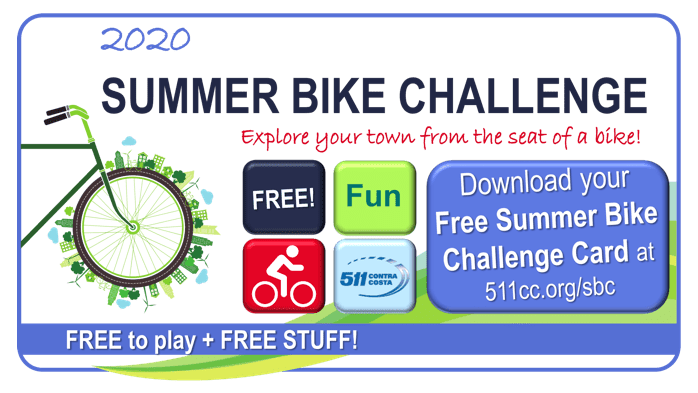
Looking for free summer activities that are fun for the whole family? Check out 511CC’s Summer Bike Challenge.
Available in Antioch, Clayton, Concord, Martinez, Pleasant Hill, Walnut Creek, Pittsburg, Oakley, and Brentwood, the Challenge offers healthy fun for all ages, and the best part: it’s completely free. Participating is easy: Download a printable Challenge Card, hop on a bike, and explore your hometown. Bike to each destination and cross off squares as you go.
For safety and social distancing, we’re suspending our popular “Free Stuff!” pop-up events this summer. Instead, send us a selfie from your favorite Challenge Square destination to win a Free Stuff prize by email.